It's not certain that there are people in novels. After all, novels consist only of language. And people are more than language.
But sometimes novels are written so that while reading you believe you are in the company of real people.
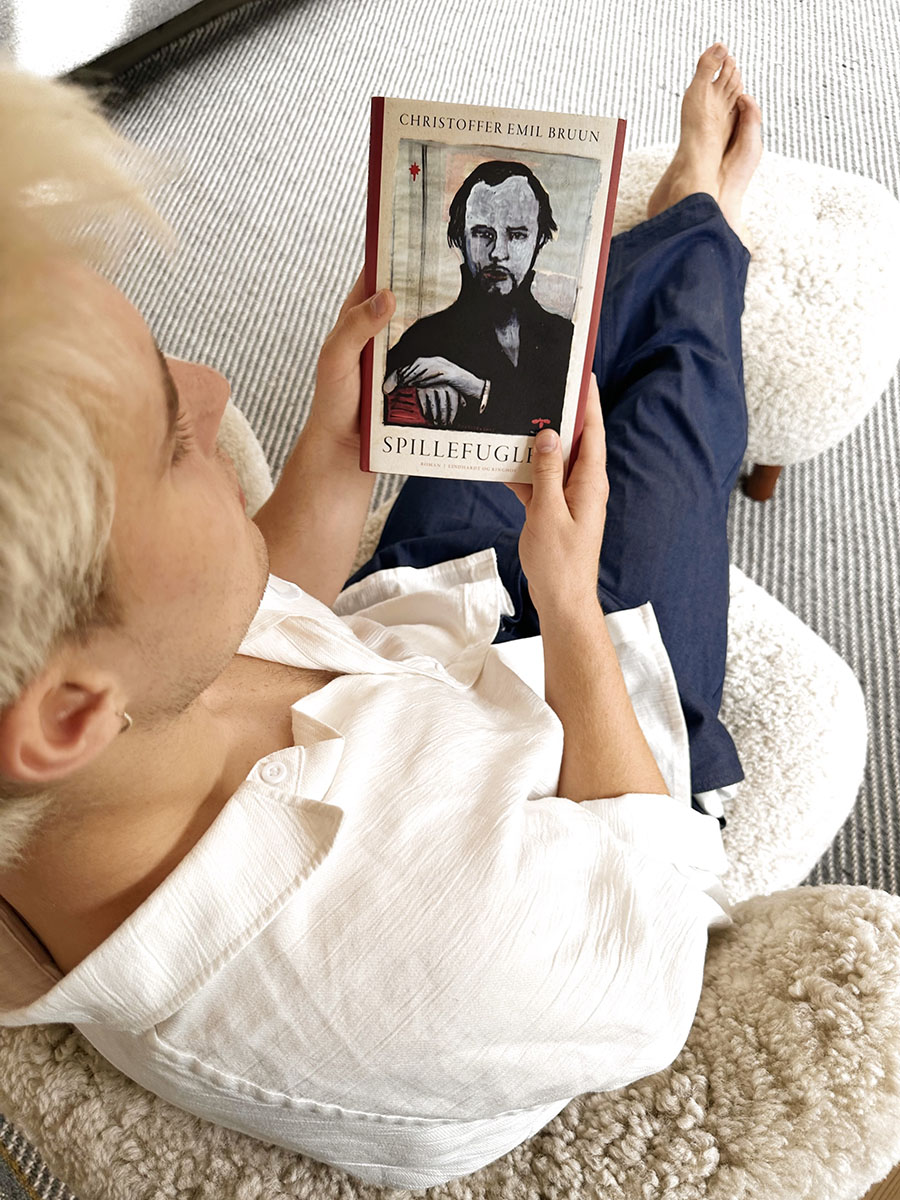
Such is the case in Christoffer Emil Bruun's debut novel The Playing Bird.
That's quite a type of person you come into company with. It's Fyodor Dostoevsky as a young man.
If he had just been an extremely creative writer, the reader could have enjoyed his company in an uncomplicated way.
But he is much more than that.
He is a gambling addict, a gambler, obsessed with gambling.
This addiction has a very special character for him, it is mysteriously connected to his spirituality. As if in his bets at the gambling table he wants to challenge God and investigate whether he exists. At the same time, he hopes for his grace, also in financial matters.
Fyodor is hopelessly fascinated by the beautiful and attractive, at once erotic, challenging and repulsive Apollinaria. He is somehow addicted to her – and to sexuality – in a way that is reminiscent of his gambling addiction.
In this book, Christoffer Emil Bruun shares with us his interest and knowledge of Dostoevsky, and his knowledge and interest in theology and religion. Through the drama of the novel, big questions about Russia's relationship with the West, about the Eastern Church and Protestantism, about religion, art and the censorship of an authoritarian government.
And as the role of women in Christianity. Dostoevsky exchanges this with the Danish princess Dagmar. Fyodor comes to Denmark at some point (which we had no idea about before reading this novel). Dagmar later becomes married to Tsar Alexander the Third. And comes to constitute a crucial link between the European royal houses.
There is also Fyodor's complicated relationship with alcohol.
So the person who moves into the novel – that's one of the things novels can do, you can live in them – will experience sharing a house with a person who is brilliant, addicted, intensely preoccupied with eroticism, in love and closely entangled in the events in Europe in the mid-19th century that will also be crucial for the times we live in today.
Christoffer Emil Bruun's Fjodor is thoroughly human – and at the same time a kind of natural disaster in constant and fatal unfolding.
Which you can't help but be both shocked by and identify with. Love and shake your head at. Maybe because the book is written so that you can always find yourself somewhere in it.