It's Wednesday afternoon. A colleague and I have prepared to meet with a family in an Open Dialogue network meeting. We are working on a rehabilitation program for people with mental health problems.
We work from a belief that people are created and developed in relationships and therefore seek to bring networks, family, and friends together in what are called open dialogic network conversations.
Today we welcome a young person and his family. The atmosphere is a little tense. I feel my breathing and my heart, my body against the seat of the chair; I lean into the security of having a familiar colleague by my side.
Open dialogue is an approach and a way of inviting people into a framework where – without an agenda and without solution orientation – one seeks to create space for listening and reflection on the words spoken.
Acknowledging, non-judgmental reflections from those who are taking care of the meeting, in this case my colleague and me, are reflected back into the network, perhaps with gentle questions that can make the words and thoughts behind them unfold even more.
The people we work with have histories of illness and many experiences of being treated and defined by others – often without having a voice that has been heard.
My colleague and I are drawing up the framework for what we invite into: A space where being able to speak without being interrupted and being able to listen without having to respond are essential elements.
At some point that Wednesday afternoon, the young man says something directly to his father. He says it clearly and distinctly; how he wants to be in the world with his challenges, and how he would like his father to accept it.
Something happens between them; for a moment it is as if the room holds its breath; then something opens between the two; the father becomes visibly moved.
It seems as if he suddenly hears and understands what his son is saying to him. And the room breathes a sigh of relief, so to speak.
I feel a deep warmth spreading through my body.
In our reflection, my colleague and I talk together while the family listens. We talk – both with emotion – about the courage it may have taken for the young person to say these things out loud – and the recognisable nature of being a parent and having to let go of old understandings. The conversation between parents and son then continued based on new, completely fresh understandings and perhaps with an experience of the importance of being heard and seen.
In several ways, practicing Open Dialogue and having a meditative practice can be similar.
We place ourselves in a framework, seek to make room for a slowness, seek to meet what arises with appreciative reflection. To experience that deeper listening can create space for inner voices that may have long been silenced.
This is very simplified, and anyone who has sat on the cushion/meditated will know that it is not that simple.
This is also the case with ÅbenDialog and network meetings.
There is a lot of life lived, many often negative experiences and a great deal of strain on both the individual and the family who participate in our meetings.
We seek to bring a kind of relaxation into the system. To have the courage of heart to endure when something is difficult and yet keep breathing and not rush anything.
And perhaps this is where the meditative practice – for me – enriches the dialogical one:
That the meditative training provides a kind of backbone that I can constantly lean on: attention to my body, my breath and heart while also paying attention outwardly to the vibrating space that I and we must take care of.
This blog post is part of a series we call 'Practice and Professionalism'‘
Our inner practice rarely lives in isolation from the rest of our lives. It contributes to the way we listen, create, lead, teach, treat, or meet other people – sometimes even without us even realizing it.
At Kontemplation's latest writing workshop, we invited the writers to explore the interaction between their inner practice and their professional or creative work. In order to give you who read the blog, examples of how mindfulness and heart training interact with working life.
Where practice can sharpen the eye, open new perspectives or call for a different way of acting and creating.
Here you can read one of the texts that was created when the workshop participants explored this very thing.
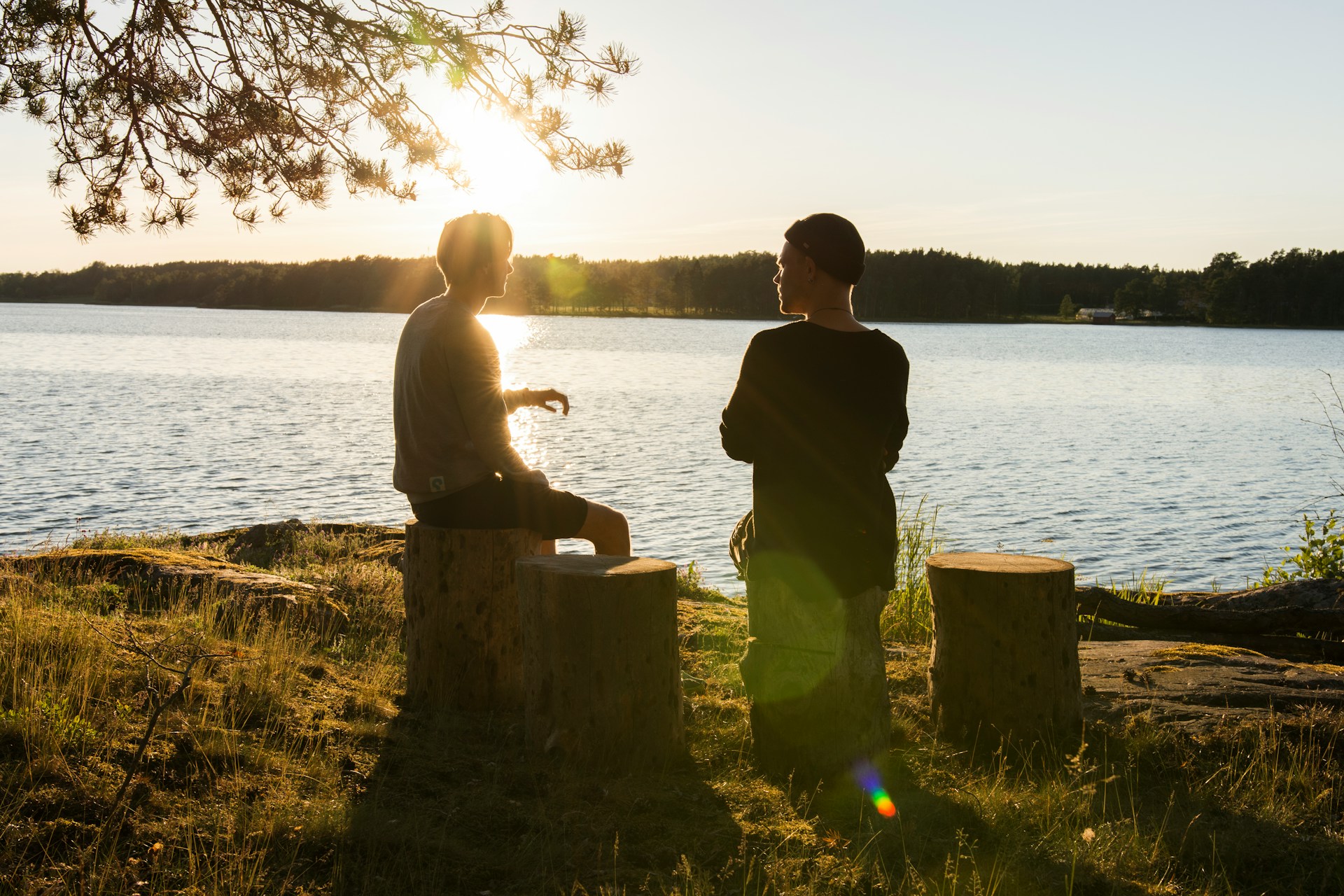
Photo: Aaron Blanco Tejedor/ UnSplash

is a trained psychomotor therapist and works with rehabilitation and dialogic practice together with people with mental vulnerability.
She is a mother of two young adults and lives in a co-op community by Brabrand Lake. She is busy writing, alone and with good playmates.
She has been taught by Hanneli and Peter for the past five years.