Philosopher and author Ken Wilber points to three important aspects of human development. He talks about; clean up, wake up, grow up.
Clean up is the work that takes place in therapeutic processes.
If we think of our personality as a house – a common image in Western psychology – then we know that houses sometimes need a good cleaning, and other times they can do with less. We also know that dust will fall from time to time and the trash will have to be taken out. It goes on and on. So it is with the house of personality. It requires us to clean and take care of our own trash.
When we meditate, Wilber says, we work with the possibility of wake up.
However, many of us experience that when we sit down to meditate, seemingly disturbing elements can often appear in consciousness.
These elements can become opportunities. One could say – to stay with the house analogy – that meditative awareness is a headlamp we put on, and with which we, sitting still, move around the house of the personality. We then get the opportunity to see where there is clutter, where there are dark spots on the floor, see cobwebs hanging from the ceiling, and we get the opportunity to see where the garbage is.
Noticing these inner tasks is an important first step. The next step is to do something about it. Which meditatively means discovering the possibilities and qualities of the energy that can be released through inner cleaning.
We can get help for this process by taking an interest in our dreams – the dreams our innate creativity produces at night while we sleep. Dreams, when we look closer, have a special wisdom, they come to us as offers, as directions to paths towards deeper aspects of ourselves. As underlinings and hints of which qualities lie in both our light and dark sides.
Dreams can be quite difficult to remember. I always keep a pad of paper next to my bed so I can write down the night's dreams as soon as I wake up - otherwise they tend to disappear into the unconscious.
But if we remember them, they will often prove to be a treasure trove of possibilities. They have a fascinating power, and when we pay attention to them, they can become guides that remind us of who we really are and what is important to us in the existential situation and wholeness we find ourselves in.
When we connect dreams, therapy and meditation together, we try to create a field where we can relax our system, see things in a clearer light and, not least, process what emerges. What has previously been put in the shadows can now be brought to light, seen and integrated into our personality, so that we can live a more conscious life.
It is a common experience that dreams are resourceful – also to an astonishing degree. They indicate that the tools to solve life's small and large challenges are already present within us. Dreams can, if given space and care, point out where these tools are. Therapy can then help us to spot them – see them – and explore how they can be used.
These two aspects – therapeutic clean up supported by the work with dreams and meditative wake up – are necessary aspects for us to be able to grow up, grow, humanly and spiritually, no matter where we are on our path of development.
Photo: Johannes Plenio /Unsplash/ Adam Grønne
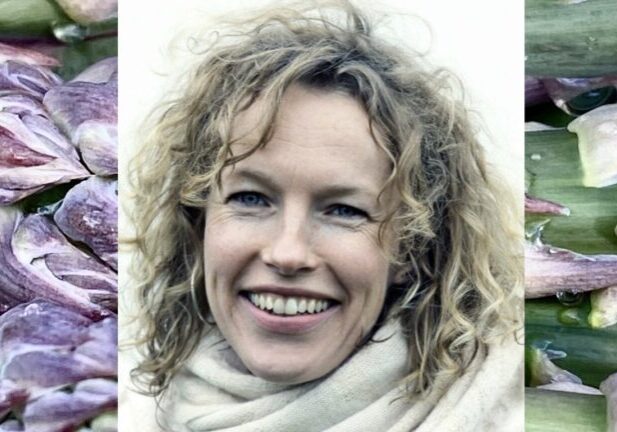
 Britta Karlshøj
is a Master of Education, specializing in mindfulness from Aarhus University and a psychotherapist MPF.
She works as a private psychotherapist and has a passion for self-sufficiency and the creation of nutritious meals.
Britta is part of the team behind Kontemplation and is the head chef at our retreats.
ONLINE DREAM PROCESS:
This late summer we are offering an online course with Britta about DREAMS, THERAPY AND MEDITATION. You can read more about the course via the link below: