BLOGCAST: The post is recorded by the author. Listen to the blog here (07:23):
In ancient times, the world had seven wonders. I remember some of them, the Colossus of Rhodes, the Hanging Gardens of Babylon, the Temple of Artemis at Ephesus. The Labyrinth at Knossos. Also shown the Library of Alexandria.
They were all material. Material.
Where are the seven wonders of the modern world?
Are they, or are some of them, perhaps because we are discovering the importance of consciousness, immaterial?
Are the 17 Sustainable Development Goals one of the wonders of the modern world? Is quantum mechanics? A modern, dogma-free essence of the wisdom of the great spiritual traditions, The Perennial Philosophy as Aldous Huxley called it, such a modern and timeless phenomenon?
I have at least one more serious suggestion for a modern wonder. Which in a certain sense is again material: One of the seven wonders of the world is the product range in Brugsen in Nørre Snede. Or the product range in any supermarket anywhere in the rich world.
This assortment is a miracle. Of technological and agricultural know-how, of transport logistics, of taste refinement: Organic Kenyan coffee. Organic maple syrup, champagne, pomegranates, mangoes, bananas, Manitoba flour, spiny lobster, saffron, vanilla pods from Madagascar, whole cardamom.
For me, there is a slight joy associated with shopping: In a moment I will be eating coleslaw with Hanneli. In a moment I will be drinking café au lait with Michael Stubberup. In a moment I will have spread a packed lunch on sourdough bread for Helle Jensen and me for when she picks me up in her red car in a couple of hours, and we will drive towards Villa Fohrde for another module in the Children's Life Sciences international education in Berlin. A legal and understandable human joy in tasteful refinement, creativity and social contact around the meal.
And then, when I listen carefully, deep down there is a slight unease.
There is a small part of the joy of shopping, whether we buy groceries in Brugsen or a pair of Vivo Barefoot shoes online, that comes from trying to cover an inner anxiety with materiality. There is a small part of the purchase that hides that I, by acquiring and consuming an external materiality, camouflage that I am going to die. Hides that life is out of control. That love is unpredictable. And unaccountable.
They cannot have had the same opportunity for material exchange in antiquity. Or in the Middle Ages. There was much less money, much less consumer exchange. Much fewer choices.
They have lived in a different kind of personality. Which must have been much more thin-skinned. Much more vulnerable. But also without the burden of responsibility that comes from having co-responsibility for one's own life. For one's own time.
At some point, from the Enlightenment onwards, the amount of energy available has begun to grow. In individuals and in society. At first an imperceptible growth and then exponential.
That growth has, I imagine, been driven by the same thing that stirs in me when I shop at Brugsen:
The celebration of consumption, the legal and beautiful joy of celebrating and enjoying the endless amount of creative experiences of durability.
And the slight, nagging, inner unease of feeling that one has projected the fear of doom onto the outside world and is trying to control it there. Trying to alleviate the fear of death and separation by, as a person or nation, buying food, houses, cars. Teslas. Automatic weapons, nuclear bombs. Moon rockets. Vaccines.
I think that in a way it is so simple: We have created the threatening global, material imbalances, in income differences, in the composition of the atmospheric air, in the chemistry of the biosphere, because we humans, by transforming the external world, are trying at once to hide and gain control over an internal dilemma: that something in us knows that no relationships, neither to people nor to objects, last. And that something in us feels that we are separate, that we are irrevocably separated, from the world and from each other.
This inner unbearability cannot be solved by simply redistributing matter around us. The outer imbalance is not caused by matter itself. It is caused by people and by people's emotions. By our shared longing for togetherness. By our fear of death. And by the emotions that cover these two fundamental existential conditions: Greed and aggression.
Trying to establish sustainability only through redistribution, only through external measures, is not compassionate enough. A more comprehensive care is needed. Care for the sense of distance from other people we all carry. For the experience of the inexorability of the passage of time.
There is no difference between external and internal sustainability. To see them as interconnected, to address them both simultaneously, is to kneel down in reverence. For life.
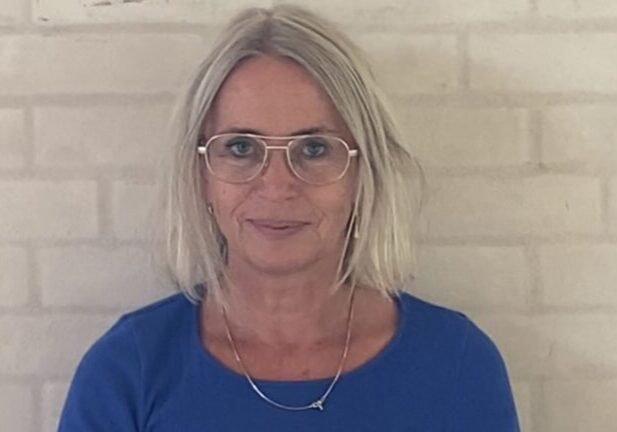
 Peter Hoeg is an M.A., author and teacher of meditation and creativity. He is one of Kontemplation's regular teachers, co-founder of the Children's Life Knowledge Association and part of the Growth Center's teaching group.
Peter lives in connection with the Growth Center in Nørre Snede and receives practical guidance from Jes Bertelsen.