We bought a farm on November 1, 2019, we got there just before Corona. We looked each other in the eye and said: how lucky are we, we got there, we got out of the city, out of the monotony, away from the asphalt, out of the compressed fields of millions of people in too little space. It was unreal to own something so big. The farm, the barns, the plot, the trees, the grass, can you own grass? We came from small square rental apartments on Bjelkes Alle, on Weigandufer in Bermondsey, on Stefansgade. Now we had a gigantic farm. The bathroom alone was bigger than my bedroom in Nørrebro.
The farm. Sure, it was broken, old, dilapidated, neglected, sighing, moldy, moldering. But now we had a place for our roots. The farmer said we reminded him of caged chickens that had been let free, and we fluttered through the rooms, shocked and happy at the same time. We tore down the wallpaper, we smelled the roses, we drank bubbles, we got drunk from barefoot in the grass. Our grass? We got used to it all, we started arguing. And then we started renovating. Two days ago I was sitting in my new living room, on the first floor.
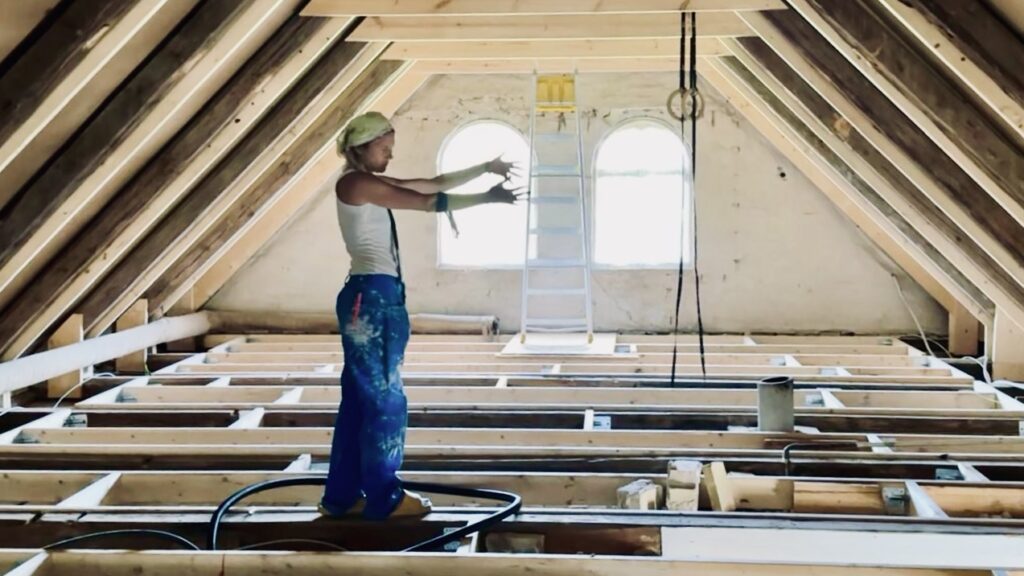
Two years ago I stood in the same place looking up at the blue sky, standing among ceiling beams with worm infestation on rotting floorboards with the wind howling, there was no roof anymore, we had taken it off.
I've spent more time here than anywhere else in the last two years. I've been working for months on all the layers that go into it before you sit back and look at a white wall. A white wall is simple and relaxing to look at. But I sit in my armchair and I look behind the white surface. And it's with a feeling like having climbed Mount Everest and being able to sit back and enjoy the joy of remembering the pain when you're no longer in it.
I was sitting in my living room two days ago, for the first time I sat in my chair on the first floor and looked at the sky through a layer of glass, and then I thought of something I heard once, and which at that moment – after several years of working with the materials, with wood, metal, plaster, lime, glue and paper wool, which has now become a wooden floor and white walls – made sense in a different way: that consciousness is not defined by space. Consciousness has a bad habit of stopping where the walls stop. But there is no real limit, consciousness is limitless, and you can set it free to continue through the layers of the walls, the walls, the roof, the building, let consciousness continue into the air, into space, through time, a bit like a caged hen that suddenly finds its freedom.
This blog post is part of a series we call 'Practice and Professionalism'‘
Our inner practice rarely lives in isolation from the rest of our lives. It contributes to the way we listen, create, lead, teach, treat, or meet other people – sometimes even without us even realizing it.
At Kontemplation's latest writing workshop, we invited the writers to explore the interaction between their inner practice and their professional or creative work. In order to give you who read the blog, examples of how mindfulness and heart training interact with working life.
Where practice can sharpen the eye, open new perspectives or call for a different way of acting and creating.
Here you can read one of the texts that was created when the workshop participants explored this very thing.

has a BA in Psychology and is a qualified yoga teacher specializing in acroyoga. She is also a trained Ritual Play facilitator and has more than two decades of meditation practice behind her.
She is a body therapist and combines her treatments with conversations. She lives in a housing community on Møn and facilitates courses focusing on the body, presence practices, ritual play and meditation.