



About listening
of | Sustainability and leadership with heart, Internal practice and working life | May 18, 2024

Welcome to a conversation with Steen Hildebrandt, professor emeritus, long-time management consultant and author of a large number of books on, among other things, sustainable management and the UN's 17 Sustainable Development Goals. He is also a co-teacher on Kontemplation's two-year supervision course.’Internal practice and working life’.
In early spring, in connection with the start of the supervision process, Charlotte Toft from the Kontemplation team and Steen Hildebrandt talked about, among other things, the state of the world, external and internal sustainability goals, spirituality, paths to change and last but not least, about listening.
In connection with the conversations, Steen Hildebrandt and Charlotte Toft have written together by email. Here is the prelude to the conversation about listening:
Dear Steen
You have been working on the global goals and leadership for many years. But I would like to allow myself, now that I have you, to also touch on another theme, and that is listening. A few years ago we met in Vejle for a conference, and here your ability to listen made a big impression on me. An ability that moved me from monologue to conversation and deeper reflection – even though I did most of the talking. Much more :-). Our meeting in Vejle has made me think regularly about listening, even though I have a long way to go to achieve your listening ability. But that in listening itself perhaps lies the fine conversation. That listening gives the other room for action. That listening may be the path to a sustainable world in particular. What do you think about these considerations? Maybe I am going too far?
Best regards Charlotte
You can listen to the conversation 'About listening' as a blogcast here:
It's Thursday afternoon, and we're sitting in Steen's living room in Frederiksberg. Steen has just picked up a pink Post-it note.
“I made a red note because I think what you wrote about listening, or listening in general, is important. It's difficult, and it's interesting, and the prerequisite for everything else is that we can listen.
I thought about that. Otto Scharmer In the Theory U book, there is a distinction that I liked when I first saw it. He distinguishes between four kinds of listening.
The first one he calls downloading. That is, we hardly listen, but just repeat the old paradigm or the old lesson. We don't listen, we just do what we usually do.
Then he mentions three other forms of listening:
The first of the three he calls the factual. That is, I hear the words and numbers and arguments you mention as factual. I read the statistics, but I don't relate emotionally or otherwise to what you say. I take it as fact.
It is an interesting form of listening that we all need to practice from time to time, namely when we need to know something about what the actual conditions regarding children, regarding illness, regarding the climate look like.
And then come the last two:
The penultimate one calls Otto Scharmer empathetic listening, and you could also call that listening with the heart. That I listen far beyond the factual. I feel you. I feel the municipality you are talking about. I feel the school where there are problems or challenges. I can feel. I can simply feel in my heart – in my emotional life, that it hurts or I am happy. I feel sad, I feel hurt, I empathize, and thus I understand on a deeper level what it is that characterizes that family or that school class or that school student – the child that I am now sitting and listening to.
If you take these four forms of listening, I think they represent a common, important set of concepts for us humans, namely that we must listen, and that we can learn to become better at listening, and we must respect all four forms of listening.
Yesterday I had a lovely conversation with my granddaughter, who is ten years old. We talked about her school and her teachers and her friends. I had a really lovely afternoon with her, where we were quiet enough that I could feel what she was telling me about herself and the school and her parents and friends. It's a slightly deeper form of listening than me listening to some factual things about the fact that there are 28 of us in the class and we have these subjects, although I also need to know that.
The last form of listening Scharmer calls generative listening. And generative listening, that's something that when I first read about it in Scharmer's book, I felt I could connect with, namely an ability to, in Scharmer's very special formulation – to listen. ‘'from the emerging future'’. It is of course a strange phenomenon or concept: the emerging or the arriving future. But if you notice, you can feel that there is something about it. And what he means by generative listening is that I listen to the emerging future – the coming future. That I am able to connect with what is about to come – what is about to happen. And I have often in my work, but also in my life in general, imagined that I could. I have been happy about that, because that is what, in the second place, means that you can perhaps say that you are prepared. Ready to meet, understand, formulate, relate to and perhaps again with Scharmer's concept to lead from this generative listening to the emerging future – the coming future.
If you take these four forms of listening, I think they represent a whole important set of concepts for us humans, namely that we must listen, and that we can learn to become better at listening, and we must respect all four forms of listening. Now I may make fun of this downloading thing, but we can't always invent, so we have to repeat and download something, and then we have to relate to the factual. We have to be empathetic, and there we again encounter kindness, but also heart contact and an ability to understand that person or that department or that organization or that country more deeply.
Yesterday I listened to an interesting lecture, and that's what makes me say country, by the Danish ambassador to Turkey. And some of what he talked about was how Turkey is of course a different country than Denmark with different cultures, different histories, a different language, other languages, which means that if you are going to listen to Turkey, you can't listen with your own concepts about Denmark, or about Scandinavia. You have to listen from a different place, which is about what kind of country it is, what kind of people it is, what kind of values it is, what kind of history it is, what kind of understanding of politics it is, etc. etc. So it is also an example of how listening empathetically requires that you listen from a different place than if you just ask for information about how many people live in Turkey and what their main occupation is. There are different levels and depending on the level, you will understand more and more deeply or less and less deeply what kind of country or person you are actually facing.”
We have reached the end of Steens and my conversation, and I – Charlotte – try to round off our conversation about listening:
I would like to end by referring to our conversation in Vejle a few years ago, and now I intentionally say conversation, but where you listened and I spoke. And that's when it struck me that when the other person listens so attentively, a slowness also comes in. A slowness is imposed, and focus becomes sharper. What I experienced was that my focus became sharper the more you listened. I could feel that you were listening. Yes. And we didn't even know each other, so it was a very, very interesting experience for me that I have taken with me. Because something happens that when it gets slower, it also becomes focused – also inside yourself. It also makes demands when there is someone who listens with genuine presence and doesn't just come up with new questions or service the conversation, you could also say. Then you have to be sharp yourself.
Steen responds:
“Yes, and you can feel it. Of course you can feel it. Yes. And that doesn't necessarily mean that there's anything wrong with the factually oriented conversation, if it's about a few facts that I need from you and vice versa. That's fine too. But it's just a different kind of conversation – or a different kind of listening.”
Thank you, Steen. I think I'll leave those as the starting words. And I hope that I've managed to listen a little today after all.
“Thank you very much, and thank you for allowing me to be part of Kontemplation.”
Background to the conversations between Steen Hildebrandt and Charlotte Toft:
The conversations with Steen Hildebrandt, as a prelude to Steen's teaching at '’Internal practice and working life’', will be published here on Kontemplation's blog. 'About listening' is the first.
The conversations are reproduced in their original form with the exception of a few edits intended to clarify the spoken language.
Sound editing: Morten Winkler
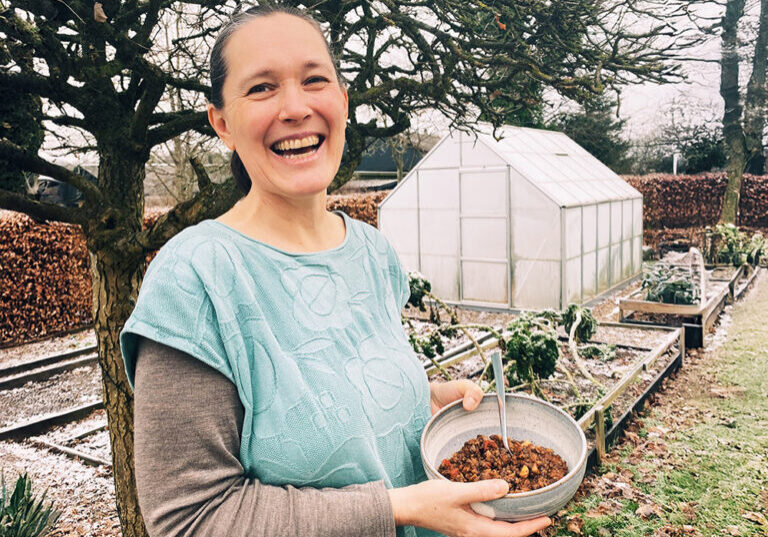
Photo: Charlotte Toft

Charlotte is a trained cultural sociologist. She has worked as a journalist, editor and manager for over 20 years in relief and development organizations. Today she works as a press and communications consultant and stress consultant. Charlotte has followed Kontemplation's teaching for a number of years and attends annual retreats. She receives teaching and practical guidance from Hanneli Ågotsdatter and Peter Høeg.
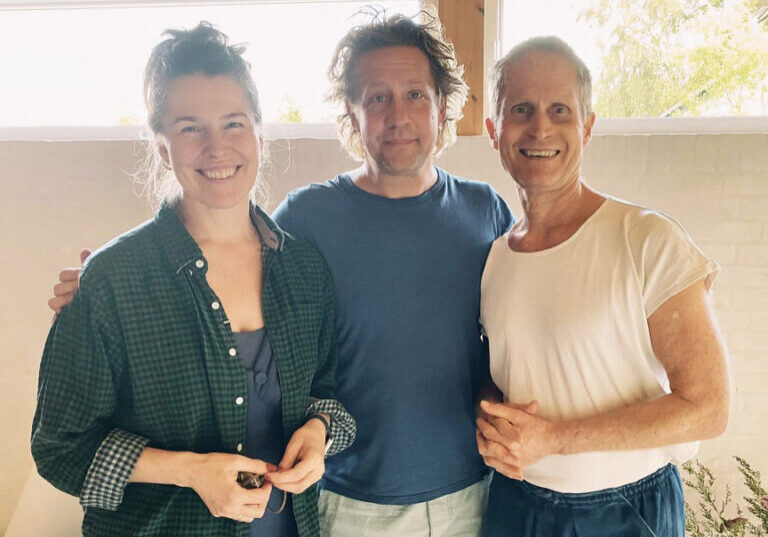
Photo: Lars Schmidt

is a PhD and professor at the Department of Management, Aarhus School of Business, Aarhus University. Formerly a member of the National Competence Council and management editor at the daily newspaper Børsen. He is the author of books, articles and columns on management and social issues and is a member of several boards of directors.









Very present and inspiring conversation, thank you🌱
Dear Britta. Thank you so much for sharing your experience with us. I am happy about that – and I am sure Steen will be too. Kind regards Charlotte/ Kontemplation