Human life is surrounded by stories.
Stories about ourselves, the world around us and others.
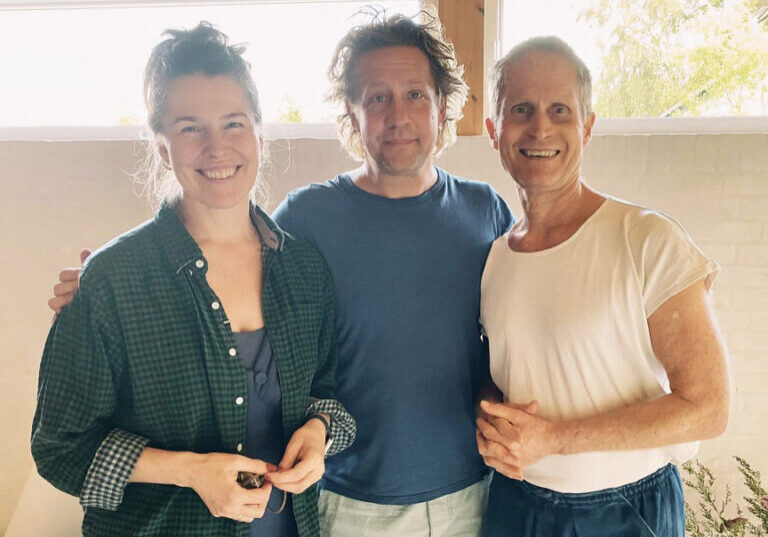
Inspired by Monday's and Peter's words about these stories, I will zoom in on the self-narration.
Through mindfulness training, we practice noticing that and when we become attached to one of our stories. Then we may discover that we can choose this story ourselves, because it is simply a story that could in principle be told differently. Doesn't freedom arise from detachment from the story? When you are no longer identical with it, but discover, observe and relate to it neutrally? And by letting go of the self-narrative, something else may peek out – which comes directly from the heart.
Listening is a declaration of love
Sometimes the stories about ourselves run on autopilot. I found that out yesterday. We were supposed to talk to a partner about our experiences of doing the body scan as ”homework” after our first meeting. We were supposed to try to listen attentively to our partner’s story with an inner anchoring in the breath and the heart area. When we listen attentively to each other, that itself is a kind of declaration of love. Because for me, it is fundamentally about seeing the other and acknowledging the person. And since I read Løgstrup, I have never been able to forget the words from The Ethical Requirement, because they hit so deeply and precisely:
The individual never has to do with another person without holding something of their life in his hand. It can be very little, a passing mood, an obviousness that one makes fade or that one awakens, a feeling that one deepens or raises. But it can also be a terrifying amount, so that it simply depends on the individual whether the other person's life is successful or not. (1956).
The compassionate, kind, and non-judgmental self-narration
And with the certainty of this responsibility and the importance of me being present and really listening to my partner, it was also a huge self-criticism that hit me when I actually didn't hear the central sentence in my partner's story. Because I was so absorbed in an inspiring idea for this post mixed with irritation that for the same reason I hadn't heard the closing sentences in Peter's story either. About stories.
Afterwards, I remembered Hanneli's words when we had previously talked about self-criticism. And just as it is about loving each other through listening to each other's stories, it is equally about giving yourself that love and being tolerant of your own distractions. So that maybe next time, when I discover that I am distracted in a conversation with someone else, I don't scold myself, as the autopilot story about myself would do, but rather become aware that I could tell a more loving story about myself: a compassionate, kind and non-judgmental one.

is a cand.mag., a high school teacher in Danish and visual arts and in the process of completing her PhD thesis in art history. She receives practical guidance from Hanneli Ågotsdatter and lives in Nørre Snede, where she is on a curriculum at the Growth Center.