

About cutting-edge research, modern monks, future pedagogy and 48 hours of silence at Mind&Life's symposium in Fürstenfeld.
These days, Mind&Life's retreat for young scientists is underway.
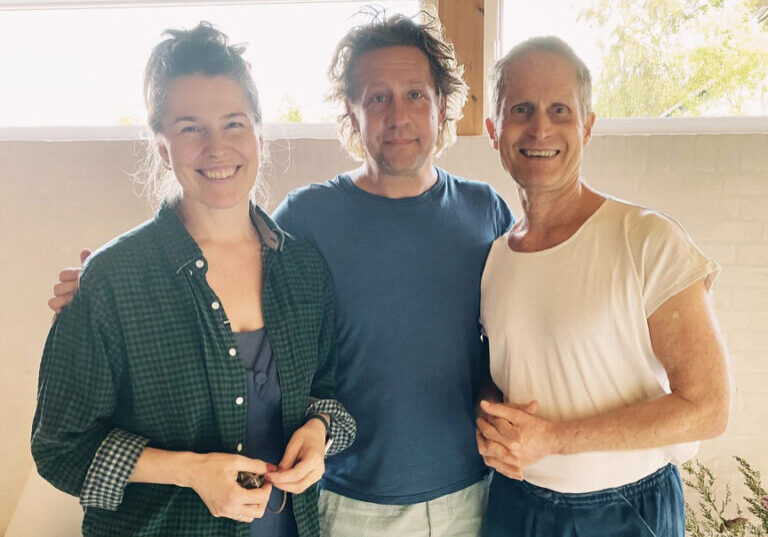
The retreat takes place at the old monastery in Fürstenfeld outside Munich, and the teachers are Martijn van Beek and the undersigned.
The architecture we find ourselves in testifies to Bavarian economic strength and the powerful influence of the church.
In a way, it is a bit strange for me to be teaching in these very rooms. It is likely that the line of abbots of yesteryear would have turned in their graves if they knew that a woman was now sitting in their rooms teaching meditation and yoga.
And then maybe not after all – the Catholic Church has also always had an esoteric, that is, an introverted and training-based, side.

This retreat is an extension of Mind&Life European Contemplative Symposium, and a moment ago we found ourselves here in the monastery among another two hundred people. Researchers and practitioners from 20 countries who had come together to practice together, to network and to present to each other the latest research in the field. contemplative science.
These annual symposia are often held at monasteries. For the past five years, we have been housed at the thousand-year-old – and still functioning – nunnery on Women's Island in Chiemsee. This time we are here in the former monastery in Fürstenfeld.
There is still activity in the church here, but the monks are gone. The complex of monastic buildings is extensive and has been able to accommodate many residents. But as monastic life in its former form, with ordained brothers who had taken the eternal vows of celibacy, obedience and poverty, attracts only a fraction of what previous centuries have known, the monastery has been rebuilt to accommodate today's contemplative life. And its interaction with modern science.
 This symposium was opened by the 93-year-old Benedictine monk Brother David Steindl-Rast.
He is a strong advocate for the importance of retreat, and he himself has spent many years in this form of immersion.
Brother David is what one would call an undogmatic mystic. His way of describing contemplative practice is largely freed from a religious belief framework, and is therefore accessible to all participants of the symposium. After the first meditation that Brother David had guided, I spoke with a Gelugpa monk who expressed a sense of recognition of the experiences of what David Steindl-Rast calls 'pure consciousness', an experience that this phenomenon was not essentially different from what in his Tibetan tradition was called 'Buddha nature'.
It is precisely a pivotal point for Mind&Life's international symposia that they take place across religions and belief systems. These meetings are sharing of experience and knowledge, with the aim and the possibility that this sharing not only remains mental-intellectual, but can also spread to the hearts and emotional systems of the participants. With the formulation of the 17 global goals, the UN has spoken for the first time spirituality in use: The idea behind this, which also becomes clear here in Fürstenfeld, is that when we dare to let go of the part of religions that consists of boundaries, dogmas and identity formations, and open ourselves to the common human spirituality that more and more people believe is the deeper intention behind all religion, then it becomes clear that there is much more that unites people than separates us.
This crucially important – and to some extent natural – insight is something that more and more people believe we need to improve children’s access to. A significant part of the conference here in Fürstenfeld has been about the school system, and how the schools’ learning environment suffers from the competitive mentality and an excessively high level of stress. A pressure that is neither constructive for teachers nor students. Or for the teaching processes themselves and the professional and human level. Researchers and practitioners such as Dan Siegel, Katherine Weare, Thich Nhat Hanh, Peter Senge, Mary-Helen Immordino-Yang, Otto Scharmer and our own Steen Hildebrandt – to name just a few international heavyweights – have for a number of years focused on the importance of the school system for the movement towards a sustainable society. They all agree that the school system places too much emphasis on outward achievements and skills, and too little emphasis on students’ opportunities to develop as people, as feeling, sensing and listening beings who are rooted in deeper parts of themselves.
The American psychiatrist and brain researcher Dan Siegel said clearly and distinctly in the symposium's opening speech that if we are to take the research of recent years seriously, it is not only necessary to modify the school system, it must also be rethought and restructured from scratch. Katherine Weare, a professor at the University of Southampton in southern England, who has advised the EU, WHO and the British government for many years on the connection between the form of education and children's human and social development, explained how England is working to bring what is called contemplative education, that is, training in presence, meditation, compassion, mindfulness and body anchoring, into the school.
Katherine has collaborated for a number of years with the Zen monk Thich Nhat Hanh, with whom she has also published the book ‘'‘Happy Teachers Change the World‘'‘. She speaks of the necessity for children to receive training in anchoring themselves within themselves first and foremost, in order to be able to face the world from this deeper self-reliance. She expresses that at the very heart of the movement inward lies the insight that the outer and the inner are fundamentally one.
-

- Jamila Tressel

-

- Katherine Weare

-

- Dan Siegel

-

- Mary-Helen Immordino-Yang

Mary-Helen Immordino-Yang, a researcher in neuropsychology, spoke about a research project at the University of Southern California that followed schoolchildren from the time they entered school and up through the grades until they graduated. The most striking picture is how widespread anxiety is among these young people. Far too many children develop anxiety symptoms that affect them on a neurological, psychological or physical level as they progress through the school system. Mary-Helen said that in order to address this problem, they were now working on a research project with a special focus on the classes where the children were doing well. Here, they examined the conditions surrounding the teachers who were mentor teachers who taught other teachers, the so-called super teachers. Here, the research attempts to describe what these teachers do to create a classroom atmosphere with less focus on performance, and where children can thrive and also develop as human beings.
This study, like much research in this area, is in its early stages. However, says Dan Siegel, from his work with management researcher Peter Senge, Danish biologist Mette Miriam Bøll and innovation and futurologist Otto Scharmer, we already know a lot about the ingredients needed for a classroom, a school, a company or an institution to develop into what is called a generative social field, that is, that people thrive and develop and that from this place impulses of value can emanate for the environment around the field: For this to take place, to take the classroom as an example, the relationship between teacher and student must be equal and respectful and the manner of communication empathetic or, even better, cordial.
These qualities must be physically noticeable; they must be experienced in the body, breathing, heart and consciousness.
These constructive spaces stand in stark contrast to the contexts where stress, performance and mutual competition set the agenda.
Dan Siegel emphasizes that we basically don't know what Generative Social Fields actually is. Although everyone who experiences it can feel it. But perhaps, he says, we will eventually be able to find a more rigorous description of the phenomenon. When people first observed and experimented with electromagnetic fields in the 19th century, they did not understand them. They could not explain them. Today, electromagnetism is the basis of all modern theory and practice around electricity.
For me, who is part of The Children's Life Skills Association, founded by, among others, Jesper Juul, Helle Jensen, Steen Hildebrandt and Jes Bertelsen, it is striking and gratifying how the pedagogical frontline research presented here at the symposium seems to revolve around, discover and describe the importance of supporting children in developing body awareness, empathy and clarity of consciousness, precisely the qualities that the pedagogy of Children's Life Sciences points to, gathered in the so-called pentagon as formulated by Jes Bertelsen, and which lists body awareness, awareness of the breath, the feelings of togetherness that are reflected around the heart, and clarity of consciousness as precisely the foundation stones of our humanity that it is most important to cultivate.
Siegel says, as another clear result from his research on MY, Massachusetts Institute of Technology, how children experience being seen and heard is another crucial factor. And he continues that even though it is not yet possible to describe in detail how some teachers succeed in creating this generative atmosphere, it is clear that these teachers partly take the children seriously, and partly are extraordinarily present.
Understanding this presence is one of the main interests of educational research.
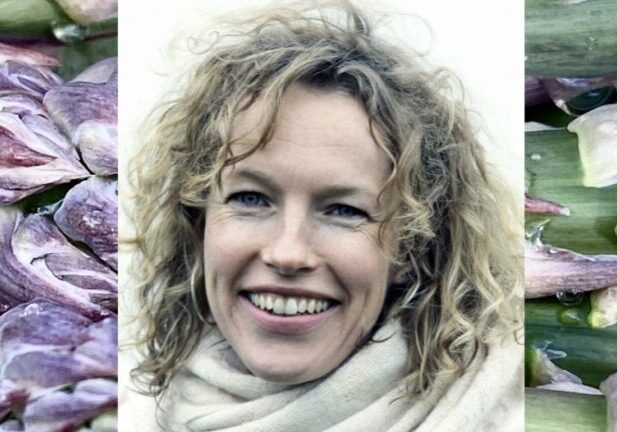
One of the speakers who touched me the most was Jamila Tressel, who was only 20 years old. The absolute youngest speaker at the symposium present and a passionate soul who is passionate about the education system of the future. A changemaker she calls herself.
Jamila says that when she was little, she was what you would call an intelligent child. She was therefore transferred to a school where the teaching was supposedly more effective and could accommodate her level. The environment here was so characterized by performance and pressure to get high grades that she developed anxiety. Anxiety of not succeeding, of not being able to live up to what was expected.
At the age of ten, she dropped out of school. Her parents noticed that she no longer smiled, that her joy and interest in learning had disappeared. They then moved her to a school where community and empathy, rather than student achievement, were at the forefront.
It brought back her joy and professional curiosity. She has just left high school and is working as a changemaker for the school system in Germany where she coaches both teachers and students with a focus on OECD Basic principles of learning: That the essential thing is:
- Learning to learn – to experience the importance of a safe learning environment
- Learning to live together – learning community instead of competition, learning cohesion
- Learning to act – to get involved.
- Learning to be – learn to be yourself, to develop care for yourself and others, to know the connection between meditation and presence
By the end of the symposium, there were many different opinions among both researchers and practitioners, in the room and in the group. But we all agreed that the urgent need to reform the world's education systems is inextricably linked to the urgent need to address the climate crisis.

Now the senior researchers have gone home, and my friend and fellow practitioner, Martijn, who is an anthropologist, is employed at Aarhus University and, like me, lives in connection with the Growth Center in Nørre Snede, and I am sitting with 33 young PhD students and researchers who have signed up for this small two-day retreat that Martijn and I will lead, and which will conclude the symposium. As a professional panel to process the participants' thoughts and questions, we have Mary-Helen Immordino-Yang and Andreas Roepstorff from Interacting Minds Centre at Aarhus University.
These young retreat participants are brain scientists, anthropologists, biologists, psychologists, religious scholars, they are the researchers of the future, and they want to combine an academic life with a contemplative practice.
In a moment we will enter 48 hours of silence to immerse ourselves in being and in togetherness without words. After the symposium's flood of verbality. And also to digest all the inspiring and hopeful things for the future that the conference has borne witness to.
Although the symposium's topic is meditation, awareness, compassion and immersion in both practice and theory, the attention during the many presentations is inevitably drawn outwards, into networking, into understanding, into the latest results, into powerpoints and graphs. And into career opportunities. In who is who around you, who is something or someone.
Also against this background, it is satisfying for these young people to be able to enter a 48-hour quiet space, with a simplified agenda: That each individual can be themselves.

In the spirit of research, we will now enter an inner laboratory, perhaps to move a little deeper into ourselves and from there, to be able to come into a little deeper contact with our fellow human beings and the outside world.
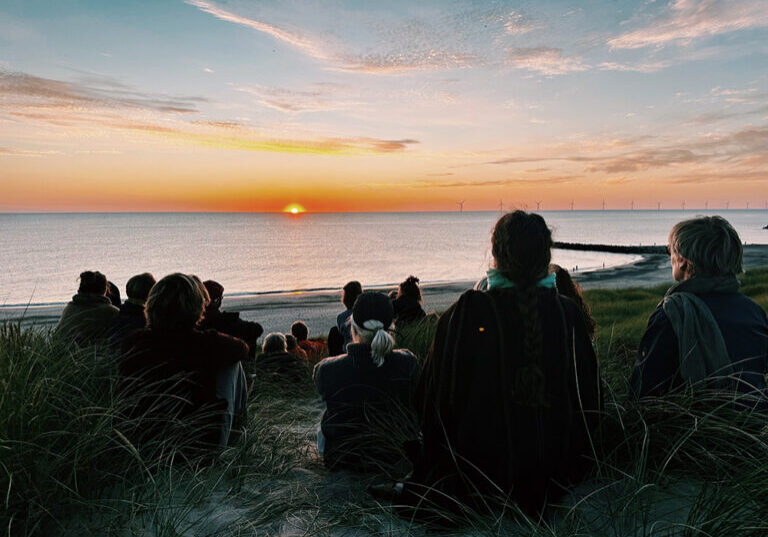
In our meditation room here in Fürstenfeld, a small group of future researchers are sitting right now, looking both towards the inner horizon and the outer. They are sitting in the echo of the essence of the symposium: that outer sustainability is inextricably linked to contact with deeper parts of oneself, to inner sustainability.
Photo: Nina Bürklin, Valentin Dinges
 Hanneli Ågotsdatter
is a cand.arch., psychotherapist and meditation teacher. She is Kontemplation's daily manager and a teacher at our courses and retreats. Hanneli has taught at Mind&Life Europe's annual gatherings since 2014. She is part of the Growth Center's permanent teaching group and a member of the Center for Systems Awareness's contemplative faculty.