Compassion Cultivation Training – experiences from an eight-week course
of | PRACTICE | February 7, 2020

As I move up an old worn concrete staircase in the Gellerup plan west of Aarhus and stand outside a massive iron door with a small laminated sign marking that this is where Danish Center for Mindfulness I am, like most people, a little unsure of what I will experience when I am about to start the first session of an eight-week course in ”Compassion Cultivation Training” (CCT).
A program that has only recently found its way to Denmark, and which has its starting point at Stanford University. Here it was developed in 2009 by a number of researchers in collaboration with Thupten Jinpa, former Buddhist monk and the Dalai Lama's longtime translator. The program is rooted in Buddhist practices and mindfulness training, but the main focus is on how we encounter suffering in ourselves and others and act on it.
The site has compassion-training in this form has been shown to have a wide range of beneficial effects on our mental health and to strengthen our ability to, among other things, empathy, compassion and kindness.
Compassion "is nothing new. It's a very basic instinct we have within us."”We are not the survival and the fittest. We are survival of the nurtured”, as a professor of psychology Louis Cozolino expresses it. Compassion is also included in all the major world religions. The fact that the concept is receiving increased attention today is due to the research that has been done on it within the last 10-15 years and the beneficial effects it has been shown to have. In the same way that it has been the case with mindfulness.
This blog post is an attempt to provide an insight into a CCT course. A course that, overall, was about training the heart's capacities, and which for me was both deeply moving and meaningful.
The first meeting with compassion
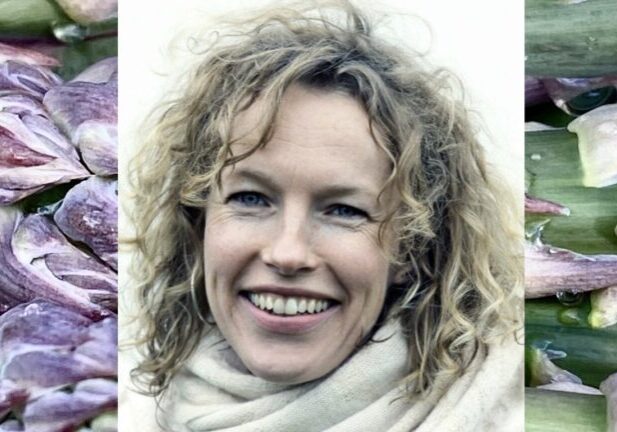
When I am the first to walk through the door, I am greeted by a smiling and very warm-hearted woman. It is Lone (B. Svenningsen), who will be our teacher on the course. She radiates calm, joy and presence and I think right then that if this is something that the course can help cultivate, then I have come to a good place. I get the feeling that compassion Training is an integral part of her, and that feeling creates calm and confidence.
We are a small group of only six participants. Something different from the large MBSR courses that also take place at the Danish Center for Mindfulness. But CCT is still new and unknown in Denmark, and I will appreciate the small group where there is a higher degree of intimacy and space to share and express ourselves individually.
The first week of the course is about mindfulness training, and we are guided through short meditations where we focus our attention on the breath in different ways. It is about calming and focusing the mind as the foundation for the actual caboutpassion training. During the course, I came to greatly appreciate my experience with mindfulness and meditation. The entire prerequisite for being able to demonstrate caboutpassion is to realize that there is suffering. This requires a certain alertness, an alertness that in my experience takes time to build. In the CCT program, only a small part is about this.
After being introduced to mindfulness training, we now move on to focusing on training caboutpassion. We start by training caboutpassion and loving kindness towards someone we care about. It has proven to be the most accessible way to connect with feelings of care, warmth, and kindness. Feelings we will later try to direct towards ourselves and eventually towards strangers.

Thupten Jinpa and Celinah Malue Jakobsen
About training compassion
We have gone together in pairs, and we are sitting across from each other around the room at the Danish Center for Mindfulness. We are going to start with one of the many exercises we go through in the program. So far we have been working on how we can show caboutpassion for ourselves and others. Among other things, by means of loving-kindness meditation, by imagining a symbol of compassion which can evoke inner resources such as warmth, care and compassion. By reflecting on our deepest values and what we would like to contribute to the world, and by sending kind thoughts to those we know, and to strangers in various ways. To name just a few of the strategies.
We take turns sharing a difficult experience. My partner starts, and I try, following the instructions, to listen with understanding, space, and care, and to imagine that all people, including myself, could experience something similar. When my partner has finished telling, we sit in silence facing each other while I repeat to myself, ”May you be free from suffering and the root of suffering. May you feel free from being afraid and worried. May you achieve joy and security. May you achieve peace and freedom.”.
After that, I experience that the space between us opens up. I feel togetherness. My body relaxes more, my heart feels open and light despite my dialogue partner's difficult experience. I feel calm and joy because I rest more in my heart and am not overcome by powerlessness, overwhelm or discomfort about what she is saying. I get the experience that I can actually do something.
It becomes clear to me here how compassion makes it possible to be with suffering in a way that is not overwhelming and draining, not frightening, but on the contrary, nourishing and feels meaningful.
This turns out to be a very valuable learning.
What can we use? compassion to?
During the period the course lasted, I experienced clear positive changes. Very similar to what the research has shown. I remember how I was happier when I woke up in the morning. How I came to feel closer and more connected to other people. How my nervous system calmed down more. How I gained an increased experience of meaning and purpose. How I gained an increased awareness of doing something for others. To name just a few of the effects.
But perhaps even more importantly, I was presented with the opportunity to meet and be with another person, whether it was a client, a student, a close friend or just a stranger, in a different way. A way where I could stand there with them in what was difficult and meet them with a greater degree of presence, kindness and care and a lesser degree of fear.
Suffering is an inevitable part of being human. Yet it is something most of us have a hard time dealing with. We try to get away from discomfort and avoid having to contain it. In this way, we distance ourselves from ourselves and each other. compassion offers a way to meet and be with suffering. It takes courage and intention, but it is a possibility. We all have an inherent capacity to show compassion. We just need to train and cultivate it. For the benefit of ourselves and others.
You can take this eight-week CCT course at the Danish Center for Mindfulness in both Aarhus and Copenhagen.
Compassion is defined as ”a feeling of caring that arises when we are confronted with our own or others' suffering and feel motivated to alleviate this suffering”.
Links to literature:
Thupten Jinpa: A fearless heart
Nanja Holland Hansen: We're going to talk about compassion.
Photo: Jeanette Lykkegaard.
The top photo shows founder of the CCT program, Thupten Jinpa, together with Lone Overby Fjorback, head of the Danish Center for Mindfulness, and Nanja Holland Hansen, psychologist and CCT-certified teacher.
 Celinah Malue Jakobsen
is responsible for communications for Kontemplation on social media.
She is a psychomotor therapist and yoga teacher, teaching meditation, yoga and stress management. She is a co-teacher at several of Kontemplation's retreats.
Celinah thrives in the open air and, based on many years of experience with meditation, body awareness work and retreats, has a special interest in the influence of nature on human consciousness.