It is a dark evening. He is sitting alone in a taxi. He has never experienced this before. He is leaving behind everything he has known in his 36-year life. He has planned the trip for a long time and in every detail, but from now on he does not know the next steps. When he has previously moved outdoors, he has always been followed by a servant. Now he is completely alone. He has jumped over the wall from one life to another. Quite literally. He has left the monastic life he knows and has embarked on a life he has only seen from a distance. He wants to find out who he is when his identity is not obscured by the ideas that he and others have about him.
The man in the taxi is Yongey Mingyur Rinpoche. He is the son of Sönam Chödrön and Tulku Urgyen Rinpoche and he has lived and studied in various monasteries for most of his life. Some of the most renowned teachers in Tibetan Buddhism have guided him. In addition, he has been interested in science and psychology from a Western perspective, and he has worked with scientists such as Francisco Varela and Richard Davidson, which has, among other things, investigated whether and how Many years of meditative practice can affect the brain. On a daily basis, Yongey Mingyur Rinpoche is responsible for several monasteries. One of them is Tergar Monastery in Bodhgaya in Northern India, whose wall he is scaling this evening.
 In fact, his journey began much earlier. When he was nine years old, his father asked him the question: ”Who are you? Are you Mingyur Rinpoche?” A question that ignited his curiosity and search for the ”real me.” It became a search that went through meditative practice, numerous years of retreats and studies of Buddhist psychology and philosophy. Together with other young monks, he received intense mindfulness training to deepen his understanding of the subtle layers of reality. A teaching that made him familiar with how the mind works. How the mind creates labels and shapes our perception of ourselves and the world. It was in order to examine these constructed labels, which function as a kind of clothing on the outside of our original consciousness, that he decided to strip them off. He was aware that his constructed label was shaped by his upbringing and status, and that it was adapted to the circumstances he had found himself in up to now. That evening in the taxi, his desire was to leave behind the identity as a monk, brother, Buddhist, meditation teacher, tulku, abbot, writer, Tibetan Nepalese and embarked on a search for his essential self. He threw more fuel on the fire, as the Buddhists say. He wanted to accelerate the process by stripping himself of the robes that he felt were in the way and were for decoration. He wanted to get to know his true self – his essence – better.
What it means to add fuel to the fire varies from person to person. When we step into an unknown country, it will affect us to varying degrees. Affect our development. We each have areas that are difficult to let go of. These may be character traits, attitudes, work, people or things that we feel particularly attached to. These may be emotional states that we do not want to let go of, or that we may be trying to avoid. When we challenge these patterns, we add fuel to the fire. For Yongey Mingyur Rinpoche, it was not only his caste identity that was challenged. From a very young boy, he had had anxiety attacks that at times completely paralyzed him. Out there in the darkness, standing at the train station with a jumble of travelers, he discovered how quickly he had to give up any notion of being able to control events, and that giving up the safe and familiar framework was not just small sticks on the fire. These were large logs that crackled, flared up, and at times the fire was almost out of control.
 This journey is described in the breathtaking book: In love with the world – a monk's journey of discovery into the world and into himself.
Yongey Mingyur Rinpoche has co-authored the book with Helen Tworkow, who is the founder of Tricycle: The Buddhist Review, which is the first and only independent Buddhist magazine in the United States. She has been interested in Buddhism since the 1960s, and she has been a student of Yongey Mingyur Rinpoche since 2006. Today she divides her time between the United States and Tibet. From the outside it is difficult to know what it means to Tworkow and Mingyur Rinpoche have written the book together. But when you consider Tworkow's excellent editing of Tricycle, it is probably important to remember that she has a not inconsiderable share of the credit for how big an impression this book makes on the reader. How it is at once so exciting that the pages almost turn by themselves, and contains so much depth and conveying of essential considerations that for me it functions as a practical text where I have to stop again and again. To look inward. To notice. To reflect.
The book was published by Borgen in 2019. In addition, two books by Yongey Mingyur Rinpoche in Denmark. ”The Joy of Being” in 2018 also at Borgen and ”Wisdom with Joy: Embracing Change and Finding Freedom.” in 2016 at Klims Lotusbøger.
Photographs are reproduced with permission from Tergar.
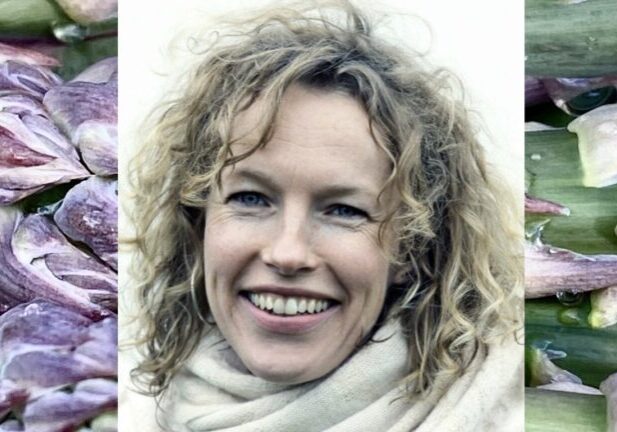
 Hanne Linde
is a visual artist and mindfulness teacher. She has extensive experience teaching both children and adults and is employed by Gentofte Municipality as a teaching consultant in creativity, relationship skills and mindfulness training. Hanne is part of the Kontemplation team and hostess at several of our retreats and courses.
Read more about Hanne here: hannelinde.dk