


A man's voice comes out of the speakers. The voice is nasal and slightly snorting. Is the man drunk? Or is he slightly retarded? I try to listen to the words the voice formulates. The words tell a royal story that the owner of the voice himself apparently is a part of. Something doesn't fit; The words portray a sophisticated, well-educated man, but the voice gives other associations.
Martin Guldberg teaches us in the program "Empathy and Presence" and today's theme is communication. Martin is a singer, performer and lecturer at Aarhus University where he teaches both artistic and rhetorical communication.

Martin Goldberg
But what exactly is communication?
Communication comes from the Latin word communis, which means common. Good communication creates a common understanding between people, and it is based on an exchange of information that is expressed, both verbally and nonverbally. But often there is a discrepancy between what the sender of a message wants to convey and the message that is received. In fact, the received message is rarely identical to the desired message sent, because we usually send many more messages than we are aware of.
When people come together, there is always interaction and therefore always communication. You cannot not communicate. And so a teacher also communicates with his students the moment he enters the classroom, which is why attention to communication seems like a natural ingredient in a teaching process for people who work professionally with children and young people.
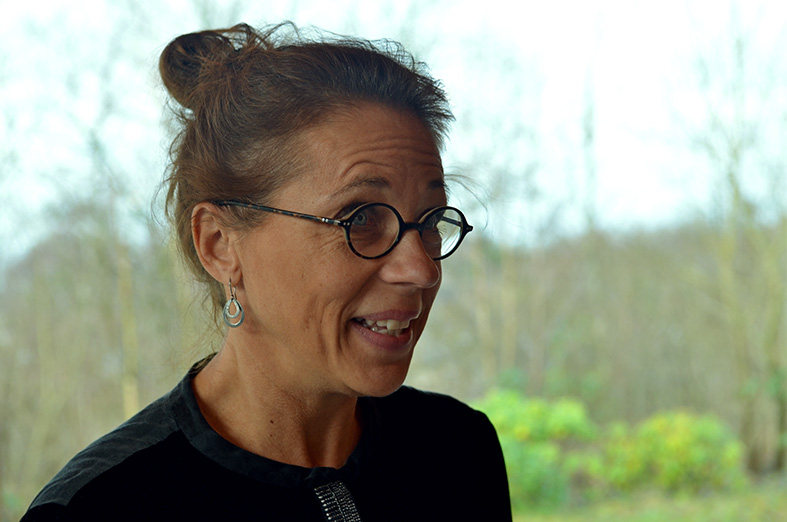
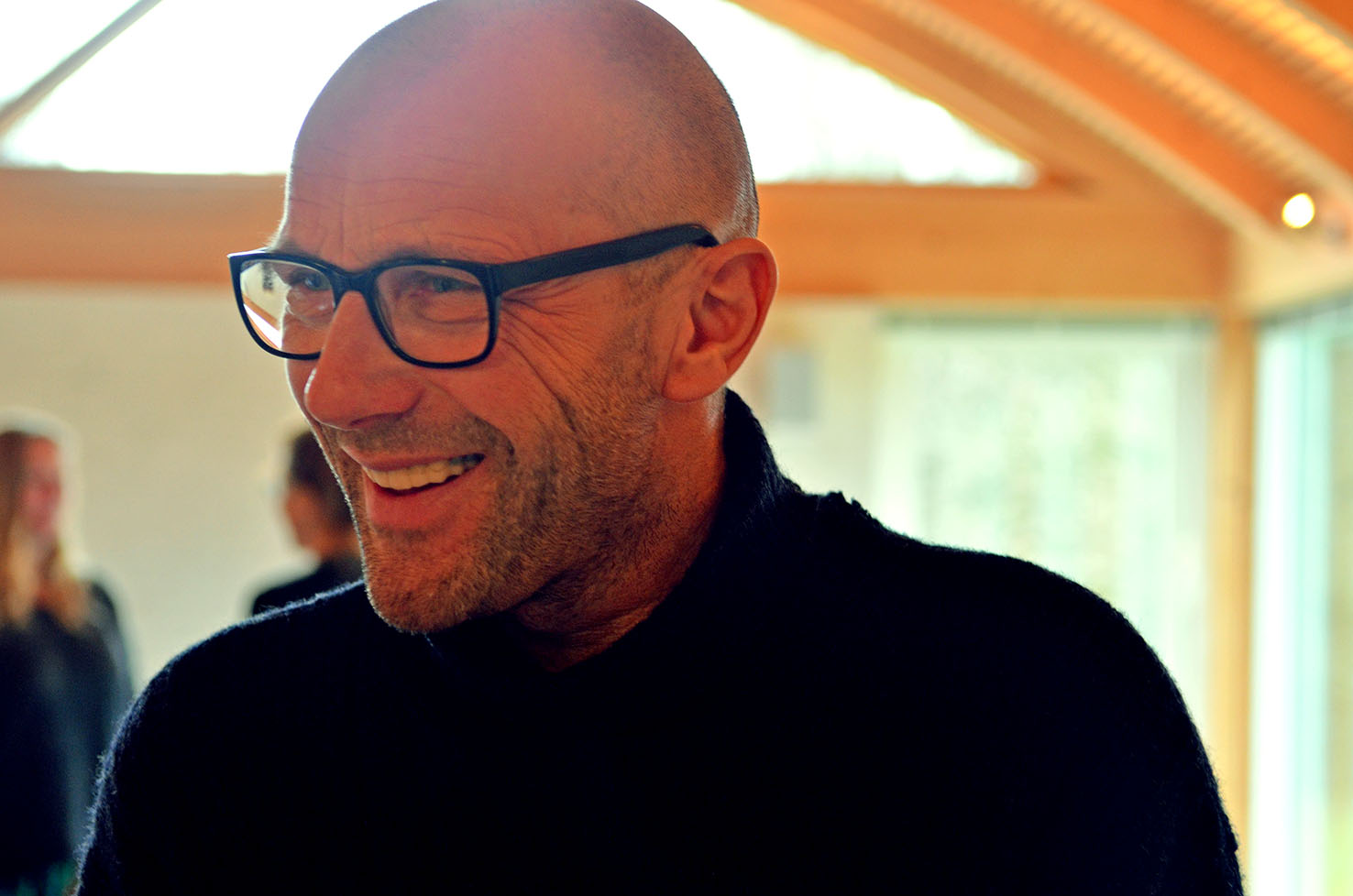
The voice in the speaker itself communicates one of today's points, namely that the voice always communicates. We listeners spend more energy listening to the voice than to the words when we have to assess who the man behind the voice is. If there had been a picture, or if the man had been present, his facial expressions, posture, gestures and position in the room would also have interfered with our interpretation of both him and his message.
In the book ”Silent Messages” from 1981, the American professor of anthropology, Albert Mehrabian, explains how we assess the credibility of a person’s communication. And one of the things he reaches is that credibility is conditioned by 55% body language, 38% voice and – perhaps surprisingly for most people – only 7 % words. His conclusion is based on studies of the communication of emotions, and therefore cannot be directly transferred to other contexts. But it is a fact that the language of the body and voice has an enormous impact on a person’s overall credibility; in fact, we rarely believe what is said if the voice and body language in some sense contradict the content.

Snapshot from the communication exercises
One of today's exercises consists of evoking an inner feeling and then expressing it with body and voice – and at the same time saying the opposite with words. First we are asked to evoke an inner feeling of anger and with an angry body expression and an angry voice say; "I am not angry". Many of us will laugh. Perhaps at the absurdity of 14 people standing and looking angry and at the same time saying that they are not angry. Perhaps at the fact that we see the absurdity, but at the same time recognize something. We have all probably been at some point in our lives doing just this; expressing one thing with words and something else with our bodies. Or we have ourselves received these opposing messages from someone in our environment.
Personally, I'll admit that I've said things that weren't what I felt several times in my life. For example, I've said something was okay even though it didn't feel okay at all inside. Or I've pretended to be calm and confident at times when nervousness was raging inside me.
I wonder if the recipients of the messages I wanted to send, in those cases, have also picked up other and opposing signals from my voice or my body language.

Jeanette and Heidi – Photo: Gitte Batz
It has been my experience that children are often the ones who reveal the play. I remember an eye-opening winter day on the Arctic tundra of Northern Kamchatka. Here, on the tenth day, we were gathered, 42 people, in four large fur tents to separate 300 reindeer from two large herds of 2,000 each. One of us was six-year-old Regina, an intelligent, sensitive and open girl. She showered me with her love and was by my side as soon as I arrived at the camp. I taught her to write, and she taught me about the spirits of the river.
One morning I was very touched by the fact that it would have been a close friend's birthday if she had not died four months earlier. There were ten of us living in my tent and I took care of my duties from the morning and served food to the shepherds. When they went out to the flock, I was filled with tears inside, and I wanted to go away from the camp for a while to remember my friend and let my emotions run free. But just then Regina came into the tent. I postponed my alone time and found a smile. We sat at the back of the tent, behind the tiled stove, and Regina had a cup of tea. She told me what she had dreamed the night before. I listened and perceived myself as being exactly as I usually am towards her. After a while she asked: "Why aren't you so nice today?"”
Regina used the Russian word khoroshaya which can mean both sweet, good and pleasant. I almost got a shock! It was so obvious that I was not myself with her. Maybe she even felt uncomfortable, all the while I was trying to do her good by hiding my own feelings. Regina gave me a lesson that has stayed with me to this day, and which is being awakened during today's lesson.

Regina is playing in the snow
Another of today's exercises is, in a sitting meditation, to examine where in our lives there is congruence between what we feel, what we say, and what we do. How does it feel in the body and mind when there is congruence between thought and feeling on the one hand and speech and action on the other?
We then examine whether there are places in our lives where we think and feel one thing, but say and/or do something else. How does this feel in the body and mind, and how does it affect external relationships?
And then we return to one of the areas in our lives where there is harmony between the inner and outer, and then notice what happens in the external relationships in those cases.

Communication laboratory
One of the first things I learned in my anthropology studies, and now as a teacher I pass on, is that there is generally a difference between what people say they do and what they actually do. This can perhaps be transferred to also include differences between what we experience inside and what we express. There can be many good reasons for this discrepancy. If we pay attention, we will experience that a correspondence between the inside and the outside often leads to feelings of freedom, flow, relaxation and joy. But there are also situations where a correspondence between what we feel and what we express can be associated with difficult emotions such as fear, insecurity and shame. These feelings can, for example, be caused by a real risk of conflict by expressing what is inside, or by what we think and feel not matching our self-image. It can also be that what we experience inside goes against cultural conventions. Often we don't even notice when there is a discrepancy between the inner message and the expressed message, or the discrepancy between what we say and what we do or show with our body and/or voice. Our inner life therefore often manifests itself in our voices, body language and actions without us being aware of it.

Karin and Hanne
Today's exercises are aimed at discovering, and thus knowing when there is a discrepancy. It may be that you are going through a difficult time emotionally in your private life – perhaps there has been a death in the immediate family, or your son has just been diagnosed with a chronic illness – but this is so private that you do not want anyone other than your immediate surroundings to know about it. It may also be that you are affected by a morning argument with your wife or a bad night's sleep. Everyone has the right to privacy, including professionals who work with people, but it is good to know what is going on inside, and to examine how this affects your bodily and tonal communication and communication to the outside.
When we know what is going on inside ourselves, we can consciously reflect on whether it will benefit the teaching and the relationship with our surroundings to let parts of our inner life be communicated verbally. If we choose to let inner moods remain unspoken, then we must know that the surroundings probably pick up parts of these inner moods anyway via our unconscious communication. Not everyone is as straightforward as Regina, so perhaps the reactions to our unconscious communication are expressed in a more subtle or less direct way. Our inner life, whether expressed verbally or not, must in any case be included in our interpretation and assessment of the response of our surroundings in relation to us.
Photo: Jeanette Lykkegård / Gitte Batz
 Jeanette Lykkegaard
PhD student in Anthropology with a special interest in how people around the world deal with existential questions about life and living it, death and what comes after. In addition to learning new perspectives on the world through my subject, I enjoy, among other things, the smell of earth, the sound of laughter, the sight of a sunrise and the other moments when I feel completely and utterly alive.