Anthropological reflections on an educational course in Empathy and Presence
Achievement society, competitive state, relational competence, learning goals, fragile youth, resilience, curling parents, pressure of expectations, school reform, inclusion, depression and 12-year-old girls are among the words that often come up when trying to understand what is happening in the kindergarten and school area. Psychologists, teachers, parents, students, educators, sociologists, business leaders and many more are involved in a seemingly endless series of debates about how children and young people of today are best raised, socialized and educated to be competent participants in and contribute to the society they are a part of.
The positions are contradictory. Some have concluded that young people today are weak, and that this is due to a morbidization of common life challenges. Others state that they are fragile due to the overprotective behavior of parents. Then there are those who assess that young people today are exposed to inhuman pressure from a competitive state for which only the best is good enough.
And what is best? It is difficult to say, but in general, in our and many similar societies, 'up' is often seen as having a higher value than 'down', just as 'active' is also usually considered better than 'passive'. In school, these values are expressed, for example, by the fact that reading skills and mathematics are considered far more important than qualities such as dancing skills and friendliness - in other words, the head is more important than the heart and feet. It is also considered important that one makes active choices early in life in relation to one's field of study - slowness, including study breaks or sabbaticals, is, generally speaking, not a quality that is celebrated.
Some find such value propositions problematic. Others conclude that they are necessary if the school is to equip children to cope well in today's world.

Uanset perspektiv lader det til at der er er bred enighed om at præstation er et nøgleord i vores samfund. Et nøgleord, som øjensynligt hænger sammen med at Danmark er blevet det som betegnes en konkurrencestat; en stat hvori der sammenlignes. Børnehaver sammenlignes, skoler sammenlignes, universiteter, arbejdspladser og kommuner sammenlignes internt i landet med det formål at kåre de bedste – altså dem der scorer højest på karakterskalaen, på trivsel, og på økonomien. Derudover sammenligner vi os med andre lande. I 2013 viste DR eksempelvis et program hvori en dansk skoleklasse sammenlignedes med en kinesisk for derudfra at konkludere om det kinesiske skolesystem var bedre end det danske. Man fandt ud af at kineserne vandt på alle fronter, selv på samarbejde og kreativitet, som man forud for programmet havde spået danskerne til at føre i. Det skabte grobund for panik; var folkeskolen nu ikke god nok længere? Det lagde også en fin grobund for skolereformen, som blev indført i 2014.
Anders Petersen, associate professor of sociology at Aalborg University, recently stated in an article in Politiken that ”The growing demands and expectations on people in the performance society are pushing more and more people over the edge and into depression. When we experience a wave of depression, it is because depression is the diametric opposite of performance. Depression is inefficient, slow and rigid – everything you are not allowed to be in the performance society. In that sense, depression is a reaction to the demand to perform all the time”.
In Jyllandsposten this year, GP Marianne Mørk Mathiesen makes a similar observation, namely that depression, stress and anxiety account for around 401% of all sick leave in Denmark today. Her interpretation, however, is that this is because young people lack resilience, and that sick leave is also due to a general trend towards a prestige in mental vulnerability. She points out that the competitive aspect has always existed, but that today we put different labels on it. Children and young people from resourceful families are ”curled”, are driven to school and develop into self-centred, spoiled young people, she believes. Mathiesen points out that this is thus distorting what is called mental illness: People who are traumatised by neglect, severe depression or debilitating social exclusion should not be categorised together with ”"spoiled vulnerable young people who have never been trained in mental resilience"” she writes.

Robustness is therefore another key word in the debates. One of the leaders in mental robustness research in Denmark is Poul Lundborg Bak, a physician and researcher at the Department of Public Health at Aarhus University. He states in an article in Information that: ”"There are a lot of challenges being talked about in growing up these days. This applies, for example, to the school reform and inclusion. This applies to the idea of the perfect life, the pressure from social media and the performance-oriented 12th grade girls. This applies to globalization, which results in uncertainty about whether the Chinese are now more skilled than us, as well as the financial and climate crisis, which makes people worried about the future."” Lundborg Bak's research indicates that it takes resilience to grow up and be able to meet challenges. For information, he explains that resilience is about having a realistic self-image and children develop a false self-image, he elaborates, both if they receive "undeserved praise" from adults and if they are met with excessive demands and challenges. Per Schultz Jørgensen, who is professor emeritus, dr.phil. and researcher within the field of children and families, seems to be on the same wavelength with Lundborg Bak, and expresses in an article in Information that “The greater the mental pressure on the individual – and it is great in the competitive state – the greater the demand for independence and internal control. In short: autonomy.” The challenge, according to him, is to strengthen the individual's judgment, so that they can speak out and choose their own direction. This requires efforts on two fronts, says Jørgensen: A redefining of the concept of upbringing and a new way of thinking in daycare institutions and schools. As parents, he says, we must find the courage to educate and be clear role models for children, so that they can develop an inner sense of value. This must be supported by the education system. If you read the school reform, you will come across the expression "life skills", and Jørgensen agrees that this should be strived for, but warns against the ambiguity, because in the expression “"There may also be an attempt to make children capable of living up to the external demands of competition even more"” The point is, he writes, that young people must first and foremost be made competent in something else, which is much more about judgment and inner guidance.
Internal control. How is this developed in the individual? How does one become able to 'speak up' and 'choose one's own direction'? How does one become resilient?

What does it take for a teacher or educator to teach children and young people the life skills that, in addition to great professional skills, will equip them for life after kindergarten and school? What does it take for a teacher to meet the inclusion requirement of including children from different social backgrounds and with different personal and mental qualities in the same teaching? And how do you increase the children's and young people's relationship skills, which is also one of the teachers' goals after the reform?
In connection with the search for what relationship skills are, a word comes to the fore that has been given a new value in recent years, namely presence. As linguist Pia Jarvad from the Danish Language Board notes in an article in Kristeligt dagblad, the word presence has changed from being a fairly neutral word in the Danish language to being a word that is given a greater and more positive value and is gradually being sought after. College principal Jørgen Carlsen from Testrup College believes that the tendency to cultivate mindfulness – another word for presence – has arisen as a response to a time of ”a restless acceleration, where things develop rapidly with rapid scene changes and new technologies, and a desire arises to shout: 'Stop the world, I want to get off'’. His experience is that without presence, one cannot enter into deep relationships with others.

Others agree with that. And now I am getting to what I really want to tell you with this blog post, namely that a training course in empathy and presence has just started in Nørre Snede for people who work professionally with children. It is a course offered by Ikast-Brande municipality, and I have been allowed to participate in it based on a long-standing interest in and practice of presence and immersion. More precisely, I have been allowed to be a participant observer, in order to cast an anthropological eye on the course.
I am glad about that, because I am curious about what motivates people to participate in such education. Are educations like this a necessary countercurrent in the society that I have tried to paint a picture of with various voices above? What I particularly have the opportunity to get answers to, and which is at least as interesting, is how one learns and whether one can learn to be more present and empathetic. I am especially curious about, and I also hope to get possible answers to, how increased presence manifests itself in people's relationships. How is this expressed?
The training is divided into eight modules, of which module two takes place over two consecutive days - a total of approximately 60 hours of teaching. In between, there are follow-up meetings via Skype. The main instructor of the training is the author and teacher Peter Høeg, co-founder of the Association for Children's Life Knowledge, who, together with psychotherapist and meditation teacher Hanneli Ågotsdatter and teacher Gitte Batz, attends all the classes. In addition, psychologist Helle Jensen, who is also a co-founder of the Association for Children's Life Knowledge, teaches two modules, and university lecturer and singer Martin Guldberg teaches half a module. What the participants have in common is that they all work professionally with children and/or young people.

When participating in the first class, a picture emerged that all the participants were motivated by different experiences to participate in the course. Common to all of them, however, is an expressed desire to accommodate their students and create good contact. Common to the participants is also that they have gained experience in different ways about the importance of their self-relationship in the encounter with their students. Some expressed it directly; ”I use myself, it's the only way to create contact”, said one participant, and another said that ”The relationship with oneself is almost the most important thing in becoming a good teacher”. Others expressed it more indirectly; ”The children should be allowed to work in peace (….) so it is important that I remind myself that it is okay to take a break.” The first month of the training course focuses on self-relationship through training in mindful presence. “You cannot meet another person more deeply than you have met yourself”, Peter says twice during the day. According to the philosophy of this training course, meeting yourself involves training in, first and foremost, becoming aware of yourself, your body, your thoughts and your feelings.
One participant finds it challenging to set boundaries and asks; how do you create respect without breaking trust? Peter addresses this question with a comment and a question. Based on his own schooling, which was characterized by an anxious respect for teachers, Peter is happy that this form of schooling has been abolished. But nothing has come in its place, he says and asks the group: ”How is behavior between people regulated when it is not to be regulated through authoritative power?” He leaves the question hanging in the air and I'm curious to see if some kind of answer will emerge during the next six months of the training, or perhaps at the follow-up day in a year.
So far, I can see that the education is designed radically differently than some of the education programs I have previously taken.
The first month is devoted to what the description calls 'own practice'. This means that the participants are presented with a number of methods for immersion that they must then practice on their own, within the framework of the fairly extensive homework – half an hour a day for the entire six months of the training – which is a mandatory part of the course.

We start by dancing a round dance followed by a meditation focusing on the breath. Later we practice yoga and here we are told that it is not about performing anything. It is not about how it looks from the outside, but about how it feels from the inside. No emotions are wrong, we are told. After the yoga we are guided through a scan of our body.
Hanneli explains at one point that one way to train your ability to be present and listen outwardly is to practice listening in the opposite direction, namely to train to listen inwardly. A good place to start this training is with the body, she says. ”Look at your toes,” she continues later in the body scan, ”"Many people have an opinion about their toes. Try to see if you can just look at them. Look at the skin color, the shape, without thinking anything about it. See if it's possible."”
We eat Hanneli's soup and Peter's homemade buns for lunch.
After lunch there is dancing, and after each person remembers a situation that has touched the heart, the participants get together in pairs and do breathing meditations sitting back to back. We are reminded that breathing always takes place in the present, never in the past, never in the future, always now. Breathing is therefore a help to become present here and now. In this case, in a physical presence with the other.

After this physical closeness, the participants, in the same pairs, practice boundary setting. They take turns walking towards each other and the one standing still must sense when he or she wants the other to stop; where does the private sphere go? When the other reaches their personal boundary, a stop must be expressed with a sound.
The lessons learned from this exercise were many. One participant said that sometimes you don't know where the boundary is until it has been crossed. Another thought that it could be difficult to feel where the boundary was. A third participant expressed that it was difficult to feel the boundary and therefore set it where they thought it was normal. The exercises make me think of Per Schultz Jørgensen's words about inner control, as part of people's development of resilience. A way through which one becomes able to 'speak up' and 'choose one's own direction'? The echo of the word role model and the phrase 'you can only meet another person as deeply as you have met yourself' are also connected to this. I have the feeling that similar exercises in boundary setting may lead to the question Peter left hanging in the air: ”How is behavior between people regulated when it is not to be regulated through authoritative power?”

In a little under a month, when we meet again for two consecutive teaching days, the idea is, according to the course description, that the participants should begin, 'with small steps', to do simple exercises in presence and empathy with the children and young people they work with on a daily basis. And that they should then begin to share these experiences in teaching as part of the training.
I am excited to follow the training in empathy and presence for the next six months. I will participate in and observe the teaching, I will write down, I will take pictures and I will reflect. I will also sit in on some of the Skype meetings that are held between the lessons. I hope to be able to follow some of the participants in their work with the children. Every month I will share something of what I see and think here on the blog. It is inevitable that I will also draw on my previous experience with presence training and my own experiences with teaching, from which I will simultaneously learn more. I consider my involvement in this course as a small anthropological fieldwork. Perhaps it could be a preliminary study for a more comprehensive research project.
The course has only just begun, but after the first day of classes it is already clear that the mindfulness training is more than just an exercise in being present here and now, it is a training in being present with a special attitude – a non-judgmental attitude.
Literature:
Lakoff, George, and Mark Johnson. 1980. Metaphors we live by. Chicago: University of
Chicago Press.
Articles with direct references:
http://politiken.dk/debat/ECE3367376/praestationssamfundet-goer-os-deprimerede/
http://jyllands-posten.dk/debat/breve/ECE8346099/ungdommen-mangler-den-psykiske-robusthed/
https://www.information.dk/indland/2014/11/mental-modstandskraft-nye-paedagogiske-modeord
https://www.information.dk/debat/2014/10/unge-opdrages-modstaa-presset-konkurrencestaten
http://www.kristeligt-dagblad.dk/liv-sjael/droemmen-om-vaere-naer
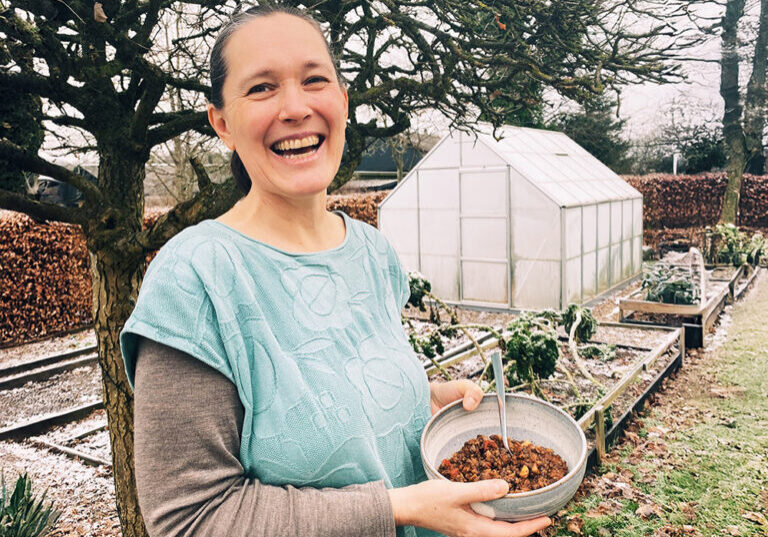
Photo: Jeanette Lykkegård
Pictures from Nørre Snede school: Hanneli Ågotsdatter
 Jeanette Lykkegaard
PhD student in Anthropology with a special interest in how people around the world deal with existential questions about life and living it, death and what comes after. In addition to learning new perspectives on the world through my subject, I enjoy, among other things, the smell of earth, the sound of laughter, the sight of a sunrise and the other moments when I feel completely and utterly alive.