Conflict resolution and mediation in practice
of | Internal practice and working life | May 29, 2020

Every mediator's actions express a certain outlook on life. This is evident in the fact that the mediator cannot avoid putting what emerges in the mediation in relation to the values that the mediator himself considers to be essential.
The mediator's assessments or perspectives are not always expressed. They may be hidden. But they can still influence the direction of the mediation process.
Do you want to contribute to the development of a profession – and modern mediation? is a new profession and not just a practical toolbox with tips on "how" - one must also develop a theoretical basis that relates to "why", that is, describe a connection between the theoretical and ethical basis for the practical skills.
In the same way that the Danish legal system, despite often massive criticism, is structured in such a way that the set of values behind the system largely corresponds to the structure of the system, mediation must be attempted to be carried out with coherence between values, form and content.
Within a discipline that is largely not based on legislation or other regulations, it is therefore essential that scientific works on the subject as well as textbook presentations dare to be clear about the motivating value base and commit themselves to it. Otherwise, the practitioners risk losing their footing and the discipline slowly becoming extinct. In the Danish context, there has therefore been a focus on an explicit value base since the establishment of the mediation function. Without this, it was not considered possible to anchor conflict mediation as a solid professional activity.
 Neither an explicit value base nor a requirement for personal reflection as a mediator has so far been at the forefront of the international literature on conflict mediation (or in practice for that matter). But now, internationally, there are increasingly more voices demanding clarity about the value base and what follows from it, since it is – naturally enough – not possible to assess the quality of mediators or mediations without knowing in relation to what this quality is to be measured.[i]In this article, I will describe how my choice of profession – mediation and conflict resolution – was based not only on a professional interest, but also on a conscious value-based starting point. As a so-called 'expert' in the field, I have had to conclude that the scientific and methodological knowledge within the subject has not been sufficient.
I have always believed that the practice of the profession depends on the person who practices it – that the profession and the personality flow together, so to speak. Book studies and professional discussions have therefore not been sufficient, the personal dimension has also had to be constantly developed.
In this series of blog posts, I will review how one can understand the attitudes and values that translate into different forms of conflict management, how this implementation takes place in practice, and finally, what necessary measures it has required for me – and continues to require – to act in harmony with the attitudes and values that I profess.
The personal challenges I have had to deal with can be briefly described in three points:
- One: To introduce my workplace (the Faculty of Law at the University of Copenhagen) to the field of study I have chosen, and to choose to remain employed there.
- The second: To maintain and act in conflict-filled situations based on the values I believe in – and on which reflective mediation is based.
- The third: To make work life, family life and spiritual practice form a whole.
The meaning of the word 'practice' in this context becomes ambiguous: partly as an expression of a meditative activity, and partly as the translation of this activity into the practical exercise of mediation and conflict management. Both meditation and conflict mediation are therefore perceived here as practice.
Behind the theoretical descriptions in the following blog posts lies - in addition to studies - my experiences gained through activities in the form of workshops and training in Denmark and in conflict and war-torn areas, as well as practicing mediation in a myriad of different conflicts.
The following blog posts about conflict mediation and understanding on a global scale will be published on Kontemplation's blog in June and July:
· Reflexive conflict mediation[ii] and sustainability
· Understanding conflict, cohesion and mutual responsibility
· To mediate in international conflicts
· Bringing meaning to life
[i] See e.g. Dorothy J. Della Noce, Mediator Style and the Question of "Good" Mediation: A Call for Theoretical Development, in Negotiation and Conflict Management Research, Vol. 5, now. 4, November 2012 p 396-402
[ii] Vibeke Vindeløv, Conflict Mediation – a Reflexive Model, 3rd rev. Ed.2013
“Conflict resolution and mediation in practice” has been edited and arranged for Kontemplation’s blog. The text was first published as part of Vibeke Vindeløv’s contribution to the article series Spirit in Everyday Life.
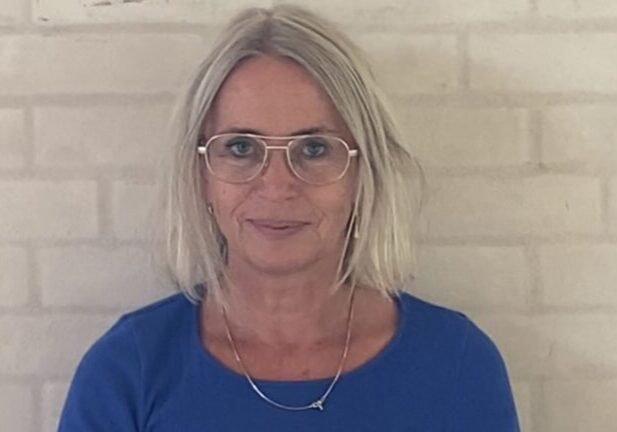
 Vibeke Vindeløv
is a lawyer, psychotherapist and professor of conflict mediation at the Faculty of Law, University of Copenhagen. She is the author of several articles and books on law, mediation and reconciliation. She has extensive experience in teaching and practical work with conflict resolution and mediation in a variety of conflict types. She is interested in the connection between value and action and the large and small conflict. Geographical focal points for her international work have been Southeastern Europe (Balkans) and South Africa.