

In Kontemplation we hold our breath.
Just like the rest of Denmark. And the rest of the world.
In a way, we have all come to a standstill.
Not physically. The daily chores continue, they have their own momentum: The children who are now home from schools and kindergartens need to be looked after, we call our elderly parents, our close friends and the children who have moved away from home. We consider and plan, as best we can, how best to get through this.
So everyday life goes on in many ways. As it should. And as it does around the world, also for those who live under conditions that are much more difficult than those we are facing in Denmark right now.
But something is holding my breath. Physically and mentally.
That's understandable.
But when we hold our breath, it is difficult to feel the body. And the heart. And feeling the body and the heart is needed now. So that is why we try – with varying success – during this time to breathe extra deeply and calmly.
Meditation – and breathing exercises – cannot and should not replace concrete actions, such as helping others in the external world. But meditation – and inner exercises – can strengthen the connection to the foundation within ourselves from which we can act as precisely and compassionately as possible, even in a crisis situation like this.
That's why the simple thing of feeling your breath is so important. Compassion is rooted in the physical. Compassion is very closely connected to directly feeling that others feel the same way I do, have a body like mine, a body that wants to live, that doesn't want foreign organisms to enter it and settle on its lungs.
It is through our contact with our own bodies and hearts that we feel the bodies and hearts of our fellow human beings. And we understand that we, who are used to showing empathy through physical proximity, may right now be best able to care for each other through physical distance.
There is an insight in the Corona pandemic – or we can choose to see it this way: It points to the importance of unity, of being there for the vulnerable in particular. It points to how we are all, in some fundamental points, equal. This contagion affects all groups in society, it is found in government offices, in the defense command in nursing homes and boardrooms. It draws, in a very serious way, the attention of all of us to how the nature we are trying to control with violence and power cannot be brought completely under control in many points.
So, like the rest of the world, we have stopped. In an uneasy, listening pause.
During that pause, we try to remember our breathing. And from there, we lean into compassion.
Which, in a situation like this, is right in front of us. Compassion is not something fancy or unusual, it is the very simple insight that on a deep level, like what is currently open internationally, we all want the same thing. And we all want the same thing for each other: To live and be healthy. And fundamentally, it is not always possible. And there, in the insight that it is not always possible, we can feel the community, we can feel our own natural sense of care for others and especially the fragile.
That feeling of caring is deeper than war, strife and competition. That caring is close to our human core. And the situation we find ourselves in now gives us the opportunity to feel it.
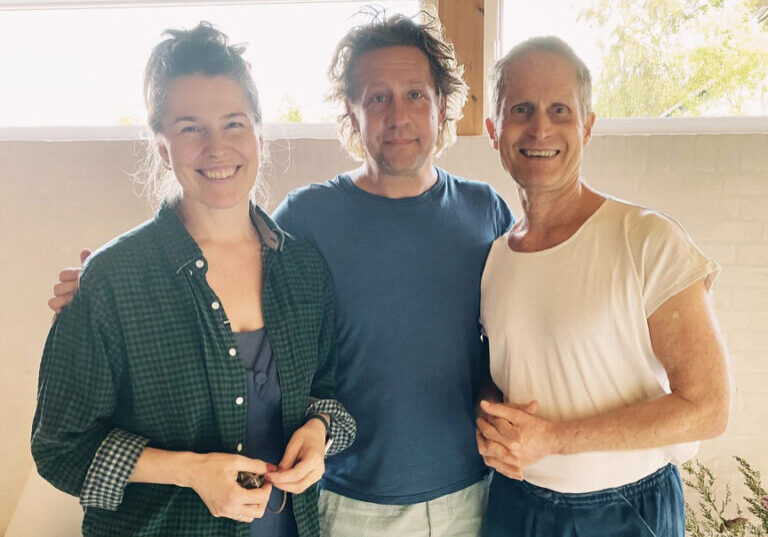
 Hanneli Ågotsdatter
is Kontemplation's daily manager and teacher at our courses and retreats. She is part of the Growth Center's permanent teaching group and a member of The Children's Life Skills Association. Hanneli is responsible for the contemplative part of Center for Systems Awareness‘' international certification program for people working with children. She is affiliated with Mind and Life Europe where she co-leads the organization's retreats for young researchers.

Peter Hoeg is an M.A., author and teacher of meditation, empathy and creativity. He is one of Kontemplation's regular teachers, co-founder of the Children's Life Knowledge Association and part of The growth center teaching group.
Peter lives in connection with the Growth Center in Nørre Snede and receives practical guidance from Jes Bertelsen.