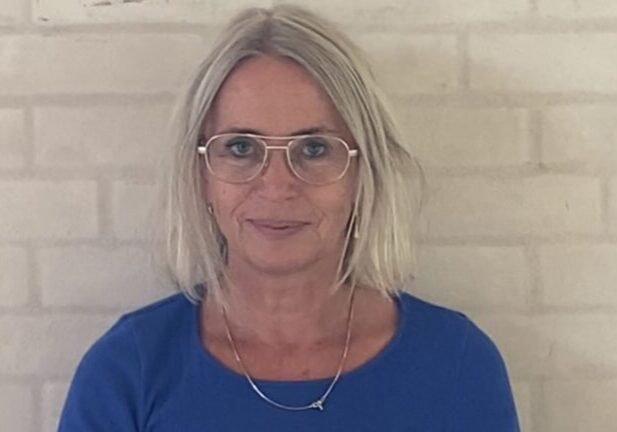
My subject is management and organizational theory. Management and economics are two sides of the same coin, should be prerequisites for each other and should ultimately be about keeping house with the Whole House. Instead, management has come to be about creating – not just results – but the cheapest, best, most, fastest and biggest results. To optimize. Management has been narrowed down to being about short-term economic optimization – if necessary at the expense of the Whole House, the whole, the planet, future generations. To that end, people have developed a large number of methods, tools, procedures, etc. The human appetite is boundless. Growth is the great promise of the capitalist system. And growth has been achieved by humans in many areas and to a tremendous extent. Since 1973, when EF Schumacher published the book, Small is beautiful. Economics as if people mattered, everything has grown. High-rise buildings, ships, factories, universities, airplanes, computers, spacecraft and much more have become larger, even breasts and buttocks have apparently become larger.
Leadership in practice is and always will be an ethical issue. One should not talk about, let alone practice leadership, without also talking about and being aware of ethics.
Management models without ethics are like loose missiles. They can end up anywhere.
Management models and management tools – as well as all other scientific and practical knowledge – do not ask what they are used for. They are available to everything and everyone. They can be used – and are used – for anything and by anyone. They can be used by the warring party as well as by the aid organization. The 1000 mentioned toxins and the 100,000 chemicals did not come out of thin air; they are partly the result of systematic optimization and short-term management thinking in a number of private companies that operate with responsibility horizons so short that one would think they were dealing with Christmas tree sellers. And partly the result of intense lobbying in Brussels. The industry organization European Chemical Industry Council spends approximately fifty million kroner annually on EU lobbying. That is the official figure. We do not know the unofficial figure, and we should probably be happy about that.
 It is estimated that there are more than 30,000 lobbyists working in Brussels. Two-thirds represent private companies. Their purpose is, among other things, to ensure the freedom of chemical companies and many other companies to develop, produce and sell what they, the companies, find most appropriate based on their narrow business interests. Not based on the interests of the EU and the world. 500 of the world's largest companies have their own lobbying office close to the EU institutions. The financial sector is estimated – officially – to spend nine hundred million kroner a year on lobbying in Brussels. The money is used, among other things, to pay 1,700 lobbyists. Much of what the world needs is prevented, thwarted, delayed and distorted by these lobbyists, who are only surpassed in number by lobbyists in Washington DC. Here we can find lobbyists who can give lectures and present statistics in defense of child weapons, just as they have helped to secure enormous supplies of weapons to private individuals in the USA.
These are not trivialities. These are phenomena that are crucial to many decisions in the world – both those that are made and the many that are not made. Some of these lobbyists are actually carrying out a socially harmful business.
Management insight itself is neutral. It is only when the models are put into use by people that the question of ethics becomes relevant. The awareness, morality and insight of those who practice management are crucial to the decisions made – by politicians, business leaders, religious and spiritual leaders, etc.
Management models and tools are silent until people bring them into play – purposes, criteria, values, attitudes and constraints. The moment this happens, they become normative decision models that can produce solutions or suggestions for solutions to the problems of politicians and business leaders. This is the essence of all management and social and business development:
What goals and objectives do we formulate and strive for? What criteria do we base our decisions on, and what limitations do we impose on ourselves and our organizations when making and implementing decisions?
How do we manage our, i.e. the planet's, resources, and how do we take into account the Whole House, including future generations?
How have we succeeded with global leadership?
A South African researcher spoke about this at a scientific conference, Global Challenges. Achieving Sustainability, at the University of Copenhagen (2014). She spoke about the state of the world and asked the audience to imagine the globe seen from space. About seeing the entire globe as a whole, as one country. What do you see? she asked and answered: ”"You see a very poor, divided, degraded, insecure, poorly led and unsafe society.".
We have reached a point in human development where short-term economic-material purposes, criteria and considerations have become decisive for virtually all decisions. There is almost no room for anything other than short-term economic thinking.
As mentioned, capitalism's great promise of growth is about economic growth, and economic growth is what human societies and organizations have striven for with tremendous and increasing strength and effect, not least over the last few hundred years. In a very short time, humans have achieved incredible improvements. But it has also come at a cost; perhaps so much so that human progress is destroying large parts of natural ecosystems?
Illustration: The globe from space, NASA
Leadership – an ethical and spiritual matter is the third part of Steen Hildebrandt's article Leadership as an ethical and spiritual issue – a turning point which was first published in 2017 as a contribution to the article series Spirit in Everyday Life.
 Steen Hildebrandt
born 1944, PhD and professor at the Department of Management, Aarhus School of Business, Aarhus University. Formerly a member of the National Council of Competence and management editor at the daily newspaper Børsen. He is the author of books, articles and columns on management and social issues and is a member of several boards of directors.