I'm one of those people who can completely lose themselves in dreams. Both the nocturnal ones and the ones that come during the day.
Several of my childhood nightly dreams were recurring, and to this day they stand as a kind of messenger for me; they appear at different periods of my life with new information. If I'm not careful, I can completely disappear into them again.
And the daydreams. I remember my elementary school teachers telling my parents that ”your daughter is well-behaved, but sometimes she is a little distant.” And I remember the feeling of the teachers' voices fading away, and the mind taking me to completely different places.
As an adult, I am interested in what dreams are all about. What I can learn from them. Where they come from, and when they stop. I investigate this in my practice, in my dreams, and in my ordinary everyday activities. And then when I listen to my four-year-old daughter, who has begun to consciously distinguish between what she experiences when she is asleep and when she is awake.
Tonight, it is my daughter who opens up this investigation. As she is about to fall asleep, she lies down, as she always does just before sleep, alternately talking, singing and whispering to herself. I lie down and listen. She moves from a song to whispering a scene from ”Ib the Dog”, a children’s program on DR. And then she addresses me in her normal voice: ”Mom, I dream about Ib the dog and the Zombie, where Ib gives the zombie hummus”. It was exactly the scene she had just recited, whispering. Before I can answer, she adds with a statement: ”Now I don’t dream anymore”. From here she starts singing and I just respond by placing a hand on her back. She falls asleep shortly after.
A space opens up within me where I slip into a state of combined practice and reflection.
Was what my daughter had just shared with me an experience of how thoughts can lead to dream-like images? Or was she in that relaxed state that borders so close to sleep that the dream images begin to pass into the waking state? And what is the difference between thoughts and dreams? How do we distinguish?
In all the cultures I am familiar with, dreams have a meaning. Among the Siberian Chukchi I have worked with and lived with in connection with my work as an anthropologist, dreams are not experienced as being separate from waking reality. Dream life is just as real as waking life. And both dimensions are constantly present. I will now think about that and then feel it. I let go of thoughts and enter into practice. Exploring the borderland from this relaxed state, lying in the dark room next to my sleeping daughter.
After a while I return to my reflections. I ask wordlessly into space if the border is artificial? Created by us humans to 'keep track' of the world. A dream image emerges as I watch it awake. I am floating down a river and out into the sea. I look towards the horizon which is dissolving. Sky and sea merge together. I take it as a kind of answer.
I let go of the image and the thoughts. After a while I ask again: Am I even awake now?
Photo: Aaron Burden
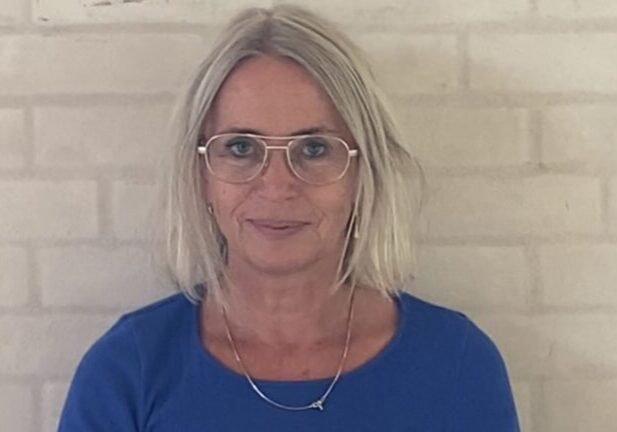
 Jeanette Lykkegaard
is an anthropologist and has written a PhD thesis on life and death processes among the shamanistic Chukchi people living in eastern Siberia. Jeanette is part of the team behind Kontemplation, where she has participated in a number of courses and retreats. She receives teaching and practical guidance from Hanneli Ågotsdatter and Peter Høeg.