BLOGCAST: This post is recorded by the author. You can listen to the blog here (7:29):
Can a simple question – a formulation we have heard many times before – suddenly open up and be absorbed in a new way? Has a place emerged where the words can now land and stay? A place that has been fertilized and watered, and which now has just the right composition of nutrients to absorb meaning?
”You have a glass in front of you. Is it half full or half empty? What are you looking for?”
Previously, this question has just slipped through my mind. Maybe it has made a brief pause. Now the words linger. I can suddenly sense the whole glass. The emptiness and the part that is filled. It becomes so clear how my mind has always sought towards the lack. Towards all that I wish was there. All that I wish I was. If only I had… If only I were more…
The energy seeps out of me when I move in this layer, where the focus is on lack, on absence. The mood affects my posture, my breathing, my gaze. Everything. It has been there for as long as I can remember. This emptiness. In recent years I have tried to care for it and love it and to the best of my ability tried to line it with light. Are all those repeated efforts now beginning to bear fruit? All the times I have held my inner children on my lap and stroked their hair and taken them to me with everything they contain? Has it fertilized the soil so that I can now also see the contents? Imagine bringing the glass to my lips and enjoying the contents. Smelling, tasting, swallowing. Digesting. Taking nourishment.
 When listening and reading the neuropsychologist Rick Hanson, these experiences may have a scientific angle. He talks about how the brain has a ”negativity bias.” How it – as Velcro – addresses the negative experiences and – as Teflon – rejects the positive. In order to survive, our ancestors had to look for and memorize every danger. When they were exposed to something or someone that threatened their survival, it was of utmost necessity that they could remember it. In this way, looking for the dangerous, the difficult, is embedded in our neural network. In the structure of the brain. In the entire magical feedback system that our body is. We have trained it to be vigilant against what can threaten us. Trained it to look for the shortcomings in order to ensure our survival. Once it was to recognize dangerous animals or minimize the risk of being ostracized by the tribal community. Today – at least in those parts of society where we are so privileged to live in safety from war, hunger and poverty – there are other things that make us vigilant. A look, a remark or a pressing deadline can set off a whole cascade of worries and affect the biochemistry of every cell in us, affecting our thoughts, body and interactions with others.
The good news is that the brain is plastic. Changeable. We can create new networks. We can train it to look for, capture and sense the good moments that are so easily lost when our inner watchdog is patrolling. It is possible to weave good experiences into the brain's networks. Not to neglect what is difficult, or because it should not be there. But to gain access to both ways of being in life. It requires persistence and training. Just like if you were to practice any other skill. Rick Hanson talks about the law of small things. That every little thing adds up and together becomes a bigger whole. In this TED Talk He goes through such a training method. He describes how to recall a joyful experience and spend time unfolding it. How to try to open up to as many images and sensations as possible and dwell on the experience so that it goes from short-term memory to long-term memory. So that having an eye for the good can gradually become a habit in line with looking for the dangers.
It makes sense. How you train will be different. I'm so grateful for all the teachers I've met along the way who have helped me with tools. So grateful for all these invitations to broaden my perspective.
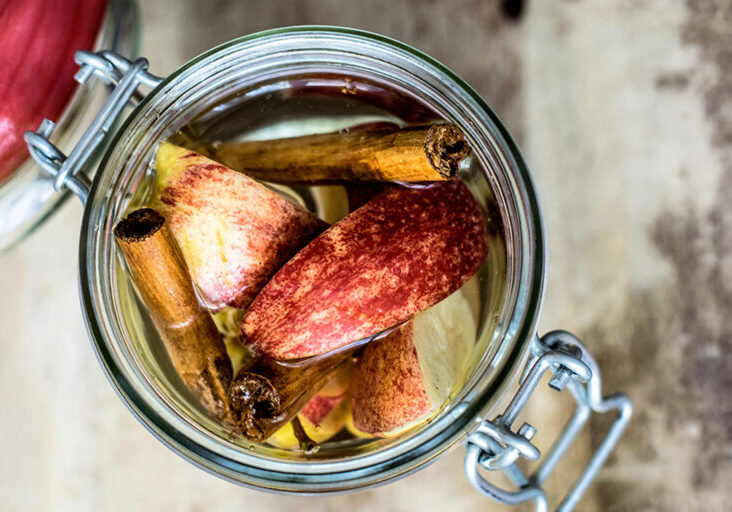
These days I have been feeling a nagging pain in my lower back after painting the bedroom floor. The irritation of having to put everything on standby burns while I hobble around. The paint buckets are filling up. It's messy here. Few positions are comfortable. I have to cancel the dinner appointment I've been looking forward to, and a grumbling worry about whether it's serious keeps coming back. "Why didn't I take a break when I felt my body ache?" "Can't I learn to stop?" The inner dialogue plays in the same familiar grooves. But there is something else too. It's as if I have more room to maneuver. There are also the birds singing outside the window. There is also spring unfolding. The steaming tea in the cup with new shoots of mint and golden honey. The scent of the tiger balm I've had applied to my lower back by a pair of loving hands. I realize that it is also the daily meditation practice that has fertilized the soil. The body scans, the breathing exercises, eating with presence, the sensation of the soles of the feet during the walking meditation. Sense the changeability. Whether it is dark or light, cold or warm. Calm or chaotic. The shifts between the different registrations. The swings of the pendulum. This training in registering has left its mark. Fertilized the soil and expanded the territory.
I turn on my side. My lower back hurts, but the taste of the mint tea is there too, and the warm hands are within reach. The cup isn't half empty. It's half full.
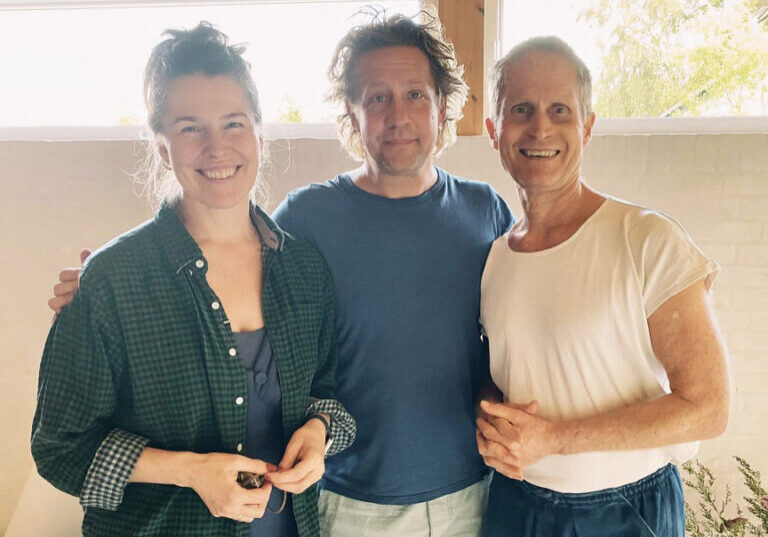
 Hanne Linde
is a visual artist and mindfulness teacher. She has extensive experience teaching both children and adults and is employed by Gentofte Municipality as a teaching consultant in creativity, relationship skills and mindfulness training. Hanne is part of the Kontemplation team and hostess at several of our retreats and courses.
Read more about Hanne here: hannelinde.dk