BLOGCAST: This post is recorded by the author. You can listen to the blog here (5:07):
I walk along the small path along the stone fence, with the beautiful old stones. A flock of birds forms a fan-shaped formation high above me. There is a smell of autumn and wet leaves. I have just gotten up from a practice period and want to take advantage of the beautiful morning light for a walk across the fields.
In the courtyard, amidst the golden colors of the foliage, lies something white, breaking the scale of rust and ochre. A piece of kitchen roll. Wet and crumpled. Someone must have dropped it. Strange that no one has picked it up. It's always so nice here. Should I? What was it used for? It looks clean enough. But there's no telling. If I pick it up, I'll have to go back and wash my hands. Maybe someone else will take it? I'm going out for a walk. Further, out into nature. Out and enjoying the gentleness of the air and all the beautiful sensory impressions before I go back and immerse myself in the book I'm currently absorbed in.
 I am working on: ”Tantra and Love” written by Jes Bertelsen. In the first chapter he describes the laws of energy processes. As I understand it, we only utilize 1/10 of the bioenergy we have available, and we even lose much of it. Among other things, by leaving unfinished situations daily. In a way, we walk a little beside ourselves. Are often not completely simultaneous and present with what is happening. Jes Bertelsen suggests that before going to bed we review the day and find the episode that is most unfinished, as this may provide an opportunity to end the event.
I can sense how the non-rounded can affect energy. How it can pull threads backwards. Threads that bind and swallow energy. My energy and the energy of others. Maybe even a global energy if you raise the perspective to a universal level.
Situation after situation pops up. Small and large. Some many years ago, others close by. They can be relational or have taken place in my personal space.
Bertelsen suggests that at least once a day you practice being present with a situation. Feel it fully, notice the pause when it naturally rounds itself out – and then leave it.
A similar message comes the same day, just from a different direction. Apparently independent of the first. A kind of synchronous message. I'm loading blog posts for Kontemplation.dk, and the next in line is: ”What death can teach us about life” by Hanneli Ågotsdatter. I always read the text aloud to myself before the audio recording. At the end of the post, Frank Ostaseski is said to emphasize the importance of endings. ”Not just the ultimate ending, but endings in general; a meal that ends, a relationship, a love affair, a work assignment, a conversation, the day as such. The way we encounter endings often tends to shape how the beginnings that follow proceed. By cultivating presence in life's many endings, we not only gain an awareness of our life from day to day, but also the best possible preparation for death.”
This is not foreign to me. But I forget about it. It is as if I only use that awareness when life is really challenging and big choices have to be made. Then it becomes a kind of navigational device. In such situations, I imagine myself at the end of my life and ask: What will matter to me if I have to leave here tomorrow? What will be significant to get said and done? Get it done?”
But why not make it a daily practice? What would it be like to ask the question: Is there anything I'm leaving unfinished today? A kind of inner and outer cleaning so that it doesn't pile up?
But where should the bar actually be placed? When is something big enough to be looked at in detail? That's what I'm thinking as I walk along the path at the end of the day. Now the light is different, it's getting darker and the scents from the leaves delight my senses. Back there in the courtyard I glimpse the white. The paper from this morning. Maybe I shouldn't distinguish between big and small at all? Maybe it's an attitude that needs to be cultivated. I take a golden leaf and use it to pick up the paper.
Photo: Daiga Ellaby, Unsplash
 Hanne Linde
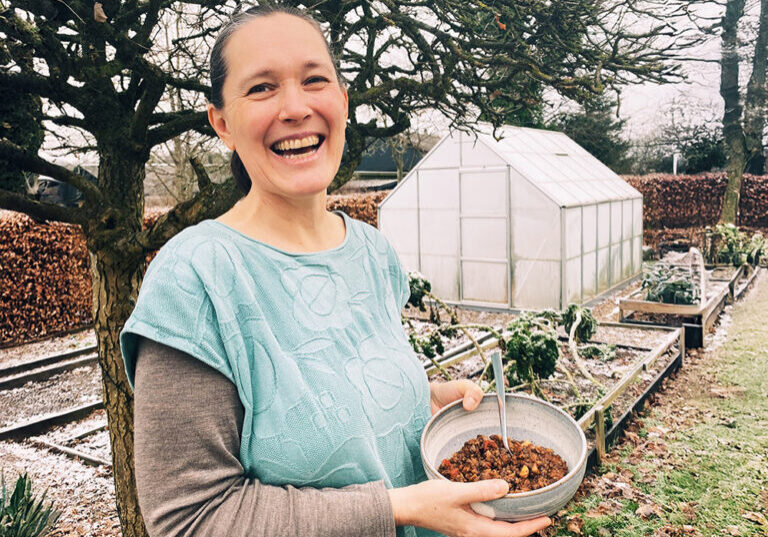
is a visual artist and mindfulness teacher. She has extensive experience teaching both children and adults and is employed by Gentofte Municipality as a teaching consultant in creativity, relationship skills and mindfulness training. Hanne is part of the Kontemplation team and hostess at several of our retreats and courses.
Read more about Hanne here: hannelinde.dk