

In this post, Peter Høeg has written a short story to a photograph anthropologist Jeanette Lykkegaard took on one of her field trips in eastern Siberia.
The anthropologist
Variation on a Theme by Borges
It has been more than 15 years since the events in question took place, but the situation is still, as I write this, unresolved.
One of the professors of anthropology at the University of Copenhagen had at that time passed retirement age, but the university had extended his employment because of the respect, admiration and fear that had always formed around him, and because it was known that a crucial piece in the completion of the puzzle that was his – and the department's – life's work was missing.
In this state of low-key, collective academic desperation, the professor caught sight of a student, a young man, in the way that internal pressure can open up opportunities in the external world.
The man, in a sense a big boy, was quiet and intelligent, a first-generation academic, from a family that had been forest workers on Harrild Heath for four generations. He was physically strong and respectful, and the professor decided that the boy should help him find and place the last piece.
He called him into his office: – There lives a tribe in the northernmost part of Outer Mongolia, he said, the Tharjaks, we know of them that they have one of the last great shamans who is able to convey an initiatory secret to selected young men of the tribe. I suggest you travel there, live with the tribe and be initiated into the secret. When you come back, you write your PhD, and I will see to it that it is published.
The boy left a week later. He sought out the Tharjaks and lived with them for a year. During this year he learned to endure physical hardships he had never imagined possible. He got used to eating raw meat and raw fish, he got used to never washing himself because the loss of skin fat would have made him easy prey in a cold of minus 50 degrees, he got used to loneliness, to weeks of silence, to hunger and thirst. One day a tiger passed him at a distance of two meters without sensing him, and he realized that he had come to smell like the polar steppe. Another day, when he was fishing in a stream, standing in the icy water up to his waist, he turned his head and saw a bear fishing a few meters away from him, and he felt that the animal in himself had turned inside out.
For the first few months he had taken notes, then he stopped, perhaps because he didn't need them, perhaps because he had felt that the very act of writing distanced him from the people whose secret he had come to acquire, perhaps because one day the written language felt meaningless.
He had observed the shamans of the tribe from the beginning, and had become increasingly certain that they no longer had the solution to the riddle. He saw that they too were infected by modernity, by its lack of self-esteem, its greed, its longing for the comfort of the cities and for power.
One night, in an orgy of alcohol, one of the shamans told him that the last real medicine man was three months' journey north, where the last of the original Thartjaks lived, where the funeral ritual still consisted of the living devouring the dead, and where they still knew where to catch, tame, and hunt with the white polar eagle.
That same night the boy set off. He traveled alone, the journey took three months, and when he arrived he had lost a toe, which he had frostbitten and then gangrene, after which he had amputated it himself with his dagger.
Among the people he reached, he found no shaman at first. A reindeer herder took care of him, an old man with a penetrating innocent gentleness that the boy could not decide for sure whether it was due to wisdom or some form of dementia. After a year, he understood that the herder was the last shaman.
The night this understanding dawned from within, like an inexplicable certainty, the shepherd told him to remember his dreams. For 12 full moon nights in a row, the boy dreamed of a white reindeer that dissolved into light. The day after the twelfth full moon, the shepherd brought him into the midst of a herd of thousands of reindeer that for incomprehensible reasons moved in a mighty circle around the two men. The shepherd made the boy kneel and initiated him into the secret.
The boy stayed with the Tharjaks for another year, then one day he said goodbye, the journey home took six months, and when he got to Copenhagen, for the first six months he couldn't stay in a house without feeling claustrophobic.
One day he went to the university and entered the professor's office.
-I am privy to the secret, he said, -but I will never write about it.
"It may not be possible to express it verbally," said the professor.
-Yes, said the boy, -I could easily point to it with my tongue.
"Perhaps you have become so much a part of their culture that you want to live on the steppes?" said the professor.
-No, said the boy, -most likely I will never return.
There was now a slight coldness in the professor's attitude. For the first time in his life, he, who had always felt about himself that he was opening doors to new halls for his students, experienced that the person he was facing had deserted the building.
"If the secret can be described, what would that description be?" he asked.
-It has the form of three sentences, said the boy. –The first one is: 'Everything that is not given away is wasted'.
-And the other one?
-The second, said the boy, is that 'There is basically no difference between life and death'.
There was now a clear reservation to be detected in the professor.
-And the third one?
-'There is basically no difference between those who are initiated into the secret and those who are not'.
Both now knew the conversation was over.
The boy left university, got married and divorced, never finished his education, but one day he applied for and got a job as a gardener's assistant in the Copenhagen parks. One morning, as the professor was walking through Kongens Have, the two men suddenly found themselves face to face again.
The boy, now a young man, sensed the professor's confusion. To try to help, he said: "There is also a fourth sentence that summarizes the previous ones. Do you want to hear it?"’
The professor nodded, and immediately regretted saying yes.
-'If this life is a dream', said the young man, -'from which we can wake up, then it makes no difference whether I dream that I am a professor or that I am working in the park. No difference whether I dream that I am in Ulan Bator or Copenhagen. No difference whether I know a secret or not.'.
They parted ways.
The professor has since been careful to avoid Copenhagen's parks. He is now a very old man in exceptionally good health.
But he seems troubled by a thought.
The two men have not met since.
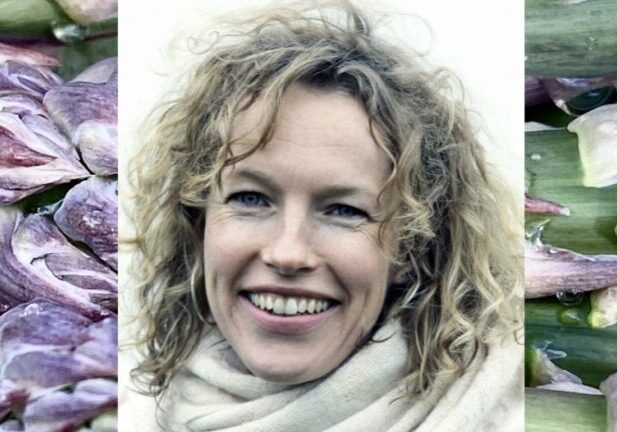
 Jeanette Lykkegaard is a cand.scient.anth. specializing in the shamanistic population group, the Chukchi, who live in eastern Siberia. She is currently writing a PhD at Aarhus University about their culture, life issues and relationship to death. As an anthropologist, Jeanette has followed the Education in Relationship Competence, a collaborative project between Kontemplation, the Children's Life Science Association and Ikast Brande Municipality. She has written a number of texts about this process, which can be read at Kontemplation's blog.
She receives teaching and practical guidance from Hanneli Ågotsdatter and Peter Høeg.
She attends an annual retreat. Last year, she brought her daughter Zoey, who was born in January 2018, with her on retreat.
 Peter Hoeg is an author and meditation teacher.
Photo: Henrik Saxgren