A trout is on its way up the river. Countercurrent and ascent.
In my left palm lies a piece of rock I picked up one summer in Norway. The path I followed wound between birch trees and rocks covered in green moss. Between the trees, a thick layer of white lichen. At the end of the path, high up, I stood still for a long time, taking in the view. In the distance, the white ice cap.
The stone lies in my hand now, as I look out over the city's rooftops. The chimneys in the distance, the whine of the S-train. Bare toes on the pine planks. The stone looks like any other piece of bedrock.
I breathe into the stone. The upper surface with light green markings of a kind of moss, now completely dry like winter flowers. And small orange spots of plant growth. Both types of moss speak a language that both no one and everyone understands.
The underside of my mountain is dark. Lifeless, only fine dust and deep furrows that reveal that it was once part of something larger, perhaps an entire mountain range. A backside, a shadowy side, that which did not receive light.

In the same way, the dark side now lies against my skin, as if it were a part of me. And it is. There are sides of me that lie in the depths and that are perhaps covered in fine dark dust. Sides that no one sees, or that are unconscious. I know that my joy, my creativity, my colorful play cannot be found without this darkness.
I feel calm in my body and think of the phrase, "”No mud, no lotus”, (No mud, no lotus) written by the Zen Buddhist monk Thich Nhat Hanh. It is as if the stone in my hand, the mountain and the beautiful lotus flower are connected in all people, because we all have both the dark and the light, suffering and joy. It is connected.
The stone is cool against my skin, yet I don't freeze. I feel life rushing down into my body, like the Norwegian river that cascades through a landscape of stone and deciduous trees. White bark and suddenly an inner image of the leaping trout on its way from the dark and deep ocean. Am I myself on my way up the river?
I think about how these basic structures are the same in all people. That we are all connected in darkness, light and life force. In my long exhale, which comes after the break, I feel the security of the connection, the universal language and look cautiously towards the ice cap beyond the city chimneys.

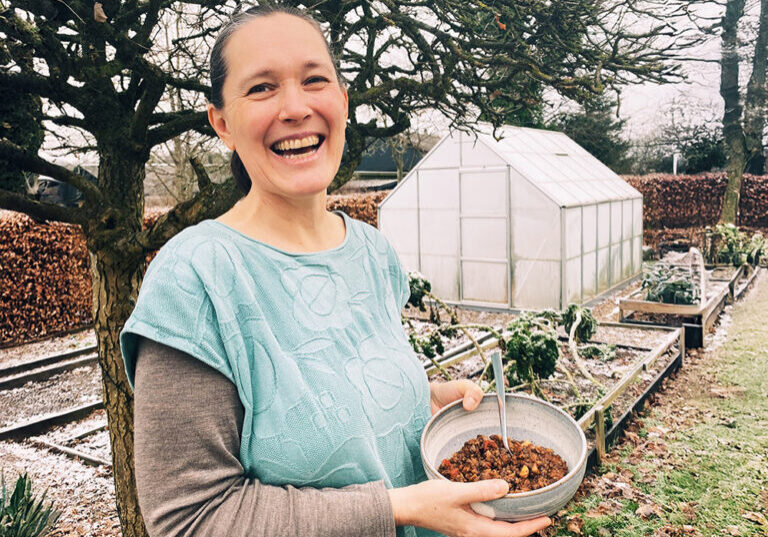
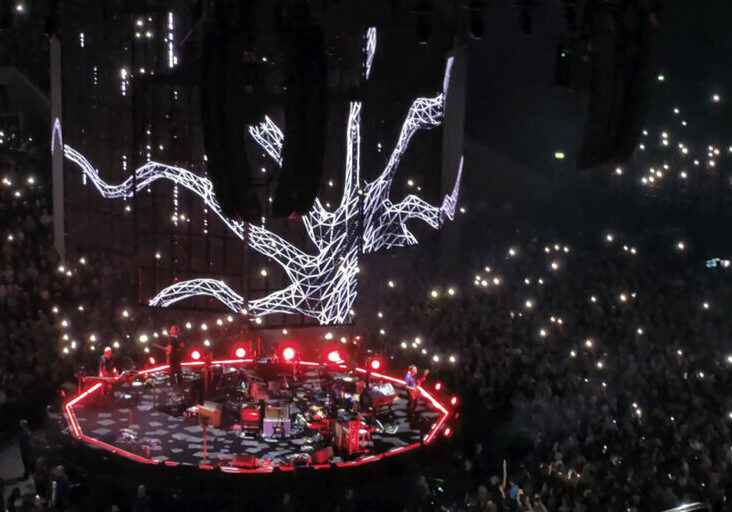
Photo: Line Fjord and Carsten Jensen
In many cultures and stories, there is the image of the common thread – a thread of fate that weaves people and events together. Often we only see the threads when we stop. When we listen.
In a time when so much divides us – politically, socially, environmentally – we need, perhaps more than ever, to find what binds us together. The invisible thread that, according to an old Chinese proverb, “can be stretched but not broken.”
At a writing workshop in Kontemplation's blog team, we invited the writers to explore just that.
We started close up. With a single object – a stone, a feather, a seashell – something we could hold in our hands. With open senses we listened to the object’s history, to memories, to nature. From here we wrote freely, investigating and listening.
Here you can read how our writers have let the invisible threads emerge through words – as clues, as testimonies, as small glimpses of the larger context we are all woven into.

is a journalist and cand.ling.merc in French. She works with communication and language, and has had a regular meditation practice for a number of years with a focus on the intersection between meditation and creative practice. She is interested in relationships and creativity in text, both rooted in the heart.
She receives teaching from Hanneli Ågotsdatter and Peter Høeg and participates in retreats.