

As far back as my memory allows me to travel back in time, I have loved to be on a journey of discovery. The unknown has always seemed attractive to me. As something that could teach me something new.
When I was three, my discoveries took place in the backyard with my dog Sasha. When I was eight, the way to a beloved pony was across the stream, through the forest and past the Moomin house, filled with adventurous and dangerous experiences. In elementary school, my curiosity and thirst for knowledge developed into a longing, and I wrote in freestyle about expeditions to African jungles and Indian steppes, where I expected to make friends with wild animals. After high school and throughout my life, my wanderlust and curiosity have taken me further and further away from my homeland, through jungles, mountains, big cities, villages, over Arctic tundra and back again. On my way, I have met some of the animals I once dreamed of, as well as countless people with an equally diverse view of and insight into the world. Both people and animals have functioned as a mirror for my own gaze, and my perception of the world has thereby been challenged. And that is exactly what voyages of discovery do, they challenge the traveler's perspective on life and view of the world, of humanity, of others and of the self, and sometimes the entire universe.
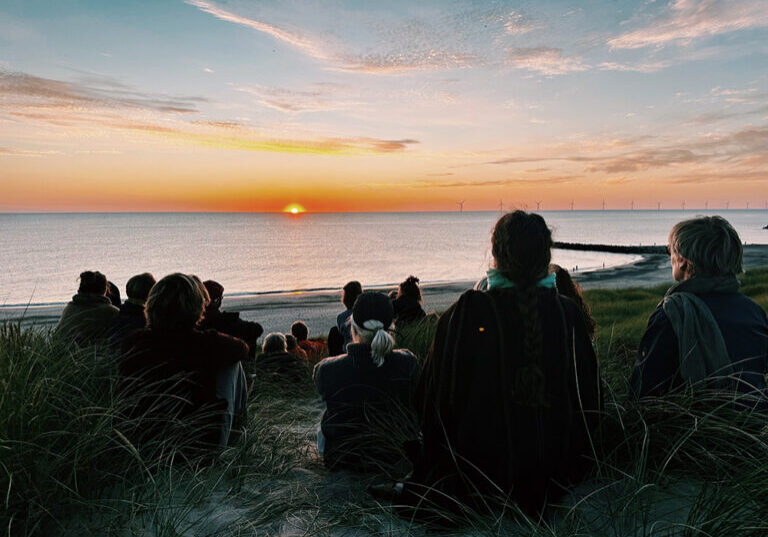
My last journey of discovery was inward. Driven by the same curiosity as on my travels out into the world, I went to Øster Løkke on the beautiful Danish west coast at Easter, to explore the world that my inner landscape constitutes, to let myself be challenged and to learn.
A harmless journey, one would think, but nevertheless the journey I have undertaken so far that has required the most courage. Because what would I encounter in there? On the outside I am tamed, but inside there is also something else, something more wild. And it is one thing to encounter the untamed outside myself, but was I ready to become friends with the wild animals that probably reside in my deepest inner being?
The trip to the North Sea was of course an important part of the journey itself, to create the calm for the immersion the journey into the interior required. The other course participants became my fellow travelers in many ways and at times when I could not see clearly because I stood in my own way, they acted as the mirror that sharpened my vision.
When we travel the world, there are several different forms of travel we can choose. For example, it can be by train, by car, on horseback, by plane, on foot or over water. Each form of travel will provide very different experiences, just as they determine the destination to a certain extent. The same applies to the journey inward. You can choose different means of transport; It can be sitting meditation, where you can, for example, travel with your breath and follow it to the bottom of your lungs. You can also choose, for example, in a lying position, to follow a guiding voice with the nerve pathways and the bodily memory into all the different parts of your body. Or you can choose a walking meditation where, through the contact with your feet, you may reach into your body's extensive knowledge space. It may also be that a creative external expression in the form of singing, playing, yoga, dancing or painting is your best means of transport inward.

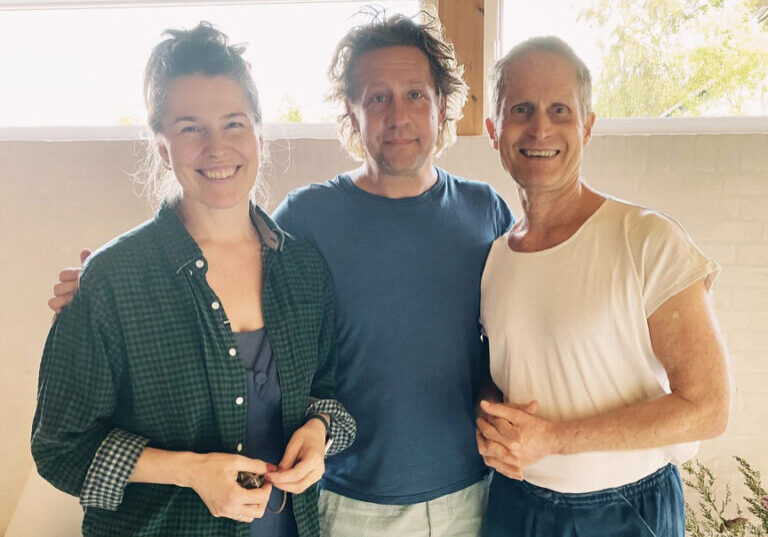
With Hanneli and Martin as guides, we were allowed to try out all of the above travel routes at Easter, and each one gave me very different experiences and beginning insights.
Most of us have a preferred mode of transportation. We just have to remind ourselves that it is not always the most comfortable way of traveling that leads to the greatest discovery. And we must remember that a true journey of discovery is not just a bed of roses. There are always challenges and resistance. Some travel destinations are difficult to reach. There are border guards and country guards and it may be that you need a visa to gain access to a certain country. Maybe you have to dress a certain way to show respect for a certain religion or culture before you can visit a certain village or temple. It may also be that it takes a long time of physical training to reach the top of that mountain your soul so deeply yearns for. In the same way, in your inner world you will encounter challenges and resistance and just as when you want to travel, you must patiently and respectfully investigate what it takes to gain access to the remote corners and precious temple spaces within you. In some places it will take hard work to reach, but so far, experience tells me that the rewards are worth the effort.
Although my inner journey has only just begun, it has given me an – for me – important insight, namely that when I deepen my knowledge of my inner world, I inevitably also deepen my understanding of and connection with the outer world. I find that the two forms of travel are – when undertaken with open curiosity and presence – directly proportional. So, when I travel out, I not only gain a greater understanding of the world around me, but also of myself. And when I travel inward, I gain an equally greater understanding of my outer surroundings. That excites me. And that makes me even more curious.
Curiosity is one of my strongest driving forces, and now that it has truly awakened, it has become connected to a longing. This longing is in many ways reminiscent of my well-known longing. Perhaps these two longings are actually two sides of the same coin: namely the desire to deeply understand the strange, paradoxical, and exciting world of which we are a part.
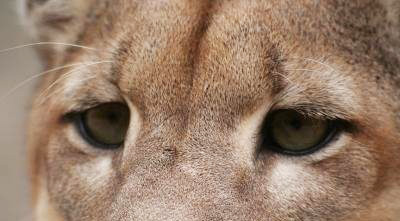
When I travel, I enjoy writing travelogues to share my experiences, lessons learned, and reflections. My upcoming blog posts can be considered exactly that, travelogues from an Easter retreat at Øster Løkke. And the animals? We can't avoid them.
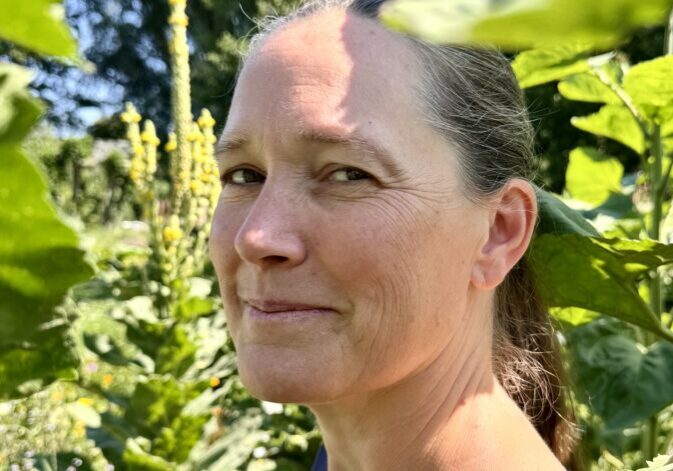
Photo: Jeanette Lykkegård

is an anthropologist and has written a PhD thesis on life and death processes among the shamanistic Chukchi people living in eastern Siberia. She researches existential themes such as belonging and longing, people's relationships to time, place and space, and the relationship between inner and outer relationships. She is currently investigating, among other things, the relationship of a group of Faroese people to the landscape and the sea through oral narratives.
She teaches mindfulness training, is a supervisor and leads reading groups on the course. Inner practice and working life, and has for many years combined academic work with a personal meditation practice
Jeanette is part of Kontemplation's daily life and practice.
She has broad and multifaceted responsibility in daily operations and a unifying role across courses, retreats and platforms, with a focus on well-being, collaboration and communication.
She has been a regular retreat participant for many years and has been involved in Kontemplation since 2015.