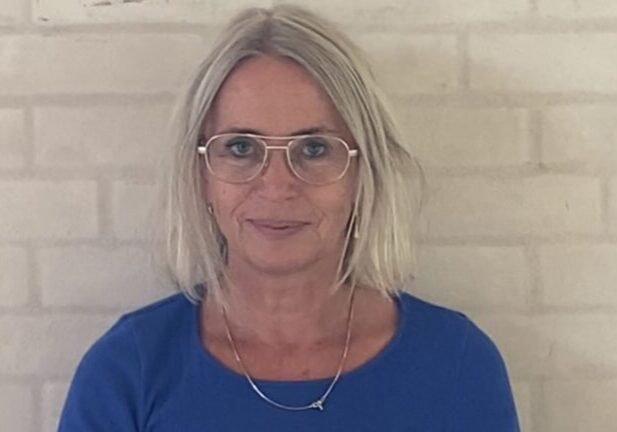
You can listen to this post as a blogcast here. Narrated by Hanne Linde (05.20):
Our friend, Karsten Frederiksen, who has attended several three-year retreats in a row, has written a new book: Three years in retreat – again about his experiences.
In the first part of the book, he shares his own experiences and experiments with how, in a modern world, one balances a project as radical as a three-year retreat with family life:
“I have been conscious that the retreat should not be too extreme and remote, so that I can present an attractive and realistic image to others who might want to follow the same path.
For example, I have sometimes chosen to be there during the retreat when something was to be celebrated in the family. About once a year I have participated in family events. I have sometimes chosen to stay overnight in that connection. It turned out not to be disruptive to the retreat or to the practice.”
Several places in the book describe how the long retreats have increased the importance of transmission. At one point he writes:
“The impulse for this surplus to benefit others has become significantly greater. When you follow this impulse, it is called passing on. As I said, the impulse to pass on becomes greater the further you get towards the essence – that is my experience.”
In chapters on 'Mediation Strategies and Empowerment', 'Mediation from the Self' and 'Being Authentic', Karsten faithfully reproduces the Dzogchen pedagogy that Jes Bertelsen has formulated.
Here expressed in Karsten's own words.
That's one of the things we enjoyed about the book, the way it speaks from personal experience. Sitting in retreat is clearly the author's second nature, the reading takes you to Karsten's rural property in Western Denmark where he has his shed (where he has lived for seven years without once sleeping in the house, he says!), and where he teaches students.
The second and longest part of the book revolves around practice experiences and strategies. Still based on Jes Bertelsen's dzogchen – formulated by Jes for Westerners in an immediately understandable and dogmatic language – the book describes ways to structure the practice period, the interaction between formal and formless practice and from here, point by point, on to nonduality.
For example, in one place Karsten describes how he has worked intensely with a version of Jes Bertelsen's so-called pentagon that includes the body, breath, heart feelings, consciousness and natural creativity.
These, Karsten says, he has worked intensively with in a simplified form where he summarizes the pentagon into body space, heart space and consciousness space. You can hear the personal and clear experience when he then writes:
“We have all been hurt or let down at some point. It closes the heart. Grief is also in the heart. Unprocessed grief closes the heart. So we can try to keep the heart space as open as possible by accepting everything that is here. There is a closed heart space and an open heart space. It is natural that the heart is sometimes open and vulnerable. Other times the heart closes to protect itself.”
In the last long part of the book, such advice or inspirational ideas on how to practice alternate with personal representations of what is called Growth Center Pedagogy, which is especially formulated by Jes Bertelsen.
In this part of the book, we are invited into Karsten's daily retreat.
He references some of his practice dreams, talks about specific situations in front of his wood-burning stove, about inertia or stagnation in practice, and about the joy when resistance gives way.
We don't have many people in Denmark who have been in retreat for as long as Karsten. It's a life choice that probably only too few make.
But which is deeply inspiring. Jes Bertelsen has often expressed that a sangha, a group of practitioners who have the same practice and the same teacher, is like an orchestra where every instrument is important. We experience Karsten's solo instrument as important for all of us.
The meaningfulness that sitting in retreat can provide runs like a thread through the book.
At one point, Karsten says that he is regularly asked if you won't get bored and that he can wholeheartedly answer: -Never!

is a meditation teacher, psychotherapist and cand.arch.
She founded Kontemplation in 2010 based on an interest in integrating inner practice into everyday life, community, and creative expression.
Hanneli lives at the Growth Center in Nørre Snede, where she is part of the center's regular teaching group.
She is also affiliated with the Children's Life Knowledge Association and has worked with contemplative practice in teaching and creative contexts for many years.

is an MA in literary studies, author and teacher of meditation, empathy and creativity.
He is co-founder of the association Children's Life Knowledge, and co-author of the book 'Empathy – what holds the world together'.
He lives in connection with the Growth Center in Nørre Snede, is part of the Growth Center's regular teaching group and is training with Jes Bertelsen.