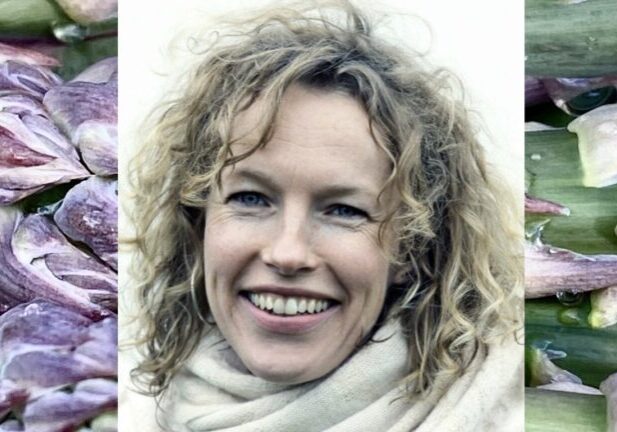
Paul Grilley has been teaching yoga since 1980. Together with Suzee Grilley and Sarah Powers, he established the gentle and profound form of yoga called Yin Yoga. He teaches Yin Yoga in Europe, the United States, and Asia. In addition to spending most of his time over the past 35 years immersed in most aspects of hatha yoga, he has studied kinesiology at UCLA and was awarded an Honorary Doctorate in Hatha Yoga's effects on muscle injuries by the California Institute for Human Science. His own yoga practice is inspired by Taoist meridian philosophy (the life energy "qi"), Chinese acupuncture theory, and Indian tantric theories. Paul's most important teacher is Dr. Hiroshi Motoyama.
In this article, Paul answers questions about yoga, talks about his own practice and teaching, and finally addresses what he sees as the biggest misconception about yoga today.
What is yoga?
Yoga is a collection of techniques that yogis found soothing to the physical, emotional, and cognitive dimensions of our existence, says Paul Grilley. These are what traditional scriptures call the three inner dimensions of the soul. When we relax into these levels of consciousness, we become more receptive to realizing our own inner nature.
The lesson is about why
In his teaching, Grilley therefore places particular emphasis on examining why one practices asanas (postures) and pranayama (breathing exercises), rather than focusing on how. If one’s yoga practice becomes mechanical and without reflection on its purpose, one cannot judge whether it is effective or should be changed. Grilley encourages his students to cultivate a curious, alert, investigative and living relationship with their yoga practice. Paul brings this into his own practice, where he constantly compares and contrasts different ways of achieving a certain goal. He tries to avoid falling into a mechanical and untested practice and likes to ask questions about stagnant myths about yoga practice. For example: ”When should I hold a bandha (body lock) during breathing exercises? Is it useful or distracting?” Or: When is breath coordination appropriate, and when is it used to control emotions and keep feelings down? The point is that we have to examine these kinds of questions a lot of times before we can give a proper answer, precisely because we are never the same person two days in a row. We can't conclude anything useful about our practice by only trying something once or twice.

Katrine Madsen:
I study Nordic languages and literature with a special interest in literary history and Swedish and Norwegian authors. Literature is fantastic because it is in a way a study and exploration into other people's consciousness and views on life, and that itself is an enormously enriching and rewarding ocean to dive into. In addition to literature, I really enjoy cooking, going for walks in nature and especially mindful yoga, which can make me completely weak in the knees.
Deeper understanding through own practice and teaching
Paul’s teaching has evolved over 35 years, and with it his understanding and ability to convey the essence of yoga has deepened. As his own practice has deepened, he has been dedicated to studying how the dimensions of yoga contain specific combinations of energy and consciousness: ”Some techniques emphasize clarity of consciousness, and others place more emphasis on energetic movement, but ultimately the goal is the same.”.
The biggest misconception about yoga
The biggest misconception about yoga, according to Paul, is that there is a one-size-fits-all yoga practice. Neither physically, emotionally, energetically nor philosophically is there a form of yoga that can be called objectively the best. Different forms of yoga suit people at different stages of their development, and therefore one should be careful not to become emotionally attached to a particular yoga school, precisely because our individual needs will also change over time. The goal of yoga transcends the different yoga techniques and traditions, just as the goal of good health transcends a specific medical treatment at a given time.
This article has been edited and translated by Katrine Madsen after the interview with Paul Grilley.
 If you want to learn more about yin yoga and Paul's approach, the book is recommended Yin Yoga – Principles & Practice at its warmest.