You can listen to the blog post as a blogcast here:
It's winter, the air outside is cold, inside it's warm.
Would you like to join us in doing a mindfulness exercise?
Maybe you are alone, maybe with someone.
We stand outside, possibly just in an open window, and catch our breath. Are you with us?
Notice how you can choose to breathe through your nose, where the air is both warmed and – a little bit – cleaned by the nasal hairs.
And we can open our mouths and inhale the cold air directly.
As we alternate between these two breaths, through the nose and through the mouth, we investigate whether there is a difference. If we are together with someone, we can talk about it. Perhaps you find situations where you breathe one way – for example, when you have to breathe both through your mouth and nose when running fast outdoors – and the other way: for example, when you are busy taking in smells and tastes, you often breathe primarily through your nose.
We can ask each other if we remember that we are breathing. Can a whole day go by without us remembering it? Half a day? An hour… Can we feel it right now?
An inhalation.
An exhalation.
When we, as we are doing right now, become aware of our breathing, think about it, feel it, know a little about it, then we make it conscious. While it is conscious, it is easier to relax. Also easier to relax a little bad mood, sadness and worry.
We might talk about some situations where each of us can become worried and tense:
What makes you anxious?
What makes me anxious?
As we talk about this, we keep trying to remember to breathe. It's a game. We're seeing if we can do two things at once: both talk about something and remember to breathe.
Let's take this game indoors. We will now close the window or door, or we will go inside if we had gone outside to breathe in the cold.
Now we part, now we continue with what we each have to do. You might have to write, or play or play computer games, I might have to cook, drink a cup of tea. But we both try to notice how long we can remember to breathe.
Of course we forget it in a moment. Maybe we have already forgotten it now. But the one of us who first realizes that she or he has forgotten it says it to the other: 'Oh, now I realized that I had forgotten that I breathe! How long did you remember that?'‘
To breathe together
It is our experience that becoming aware of your breathing, performing the seemingly simple or banal act of shifting your focus to the fact that you are currently breathing, is one of the most effective means of instantly lowering the level of tension in the personality.
As children, we have a special ability to immediately understand this. Once children have become aware of the possibilities of taking a few deep, conscious breaths, many of them remember it for a long time. Some forever.
Everyday language contains this knowledge: 'Let's just breathe', we say to each other when we feel taken aback, 'Let's just take a deep breath'. And if we have been shocked, we say: 'I completely lost my breath', or: 'I completely lost my breath', or: 'I forgot to breathe'.
The invitation in this exercise is for us to get together as a family, with a child, with an elderly person, with a friend or sibling, and stand in the doorway for a moment and breathe together. In the zone where you can perhaps feel the warm air behind you and the icy winter air in front of you.
Just a moment.
Few children are interested in systematic training. They are interested in play, in sharing an experience, preferably with an adult: Let's stand here together and breathe a few times.
Let the instruction contain a minimum of factual knowledge. Just the minimum that can supplement the awareness, support what it's all about: That we feel that we are breathing, that we feel it together, and that we and the child, the young person or the elderly person with whom we share the moment, have a short, heartfelt, experientially-oriented shared experience that does not involve performance, does not involve assessment or comparison.
Which may give us the opportunity to share what we experience, while being aware of our breathing in and out.
With wishes for a good and inspiring day.

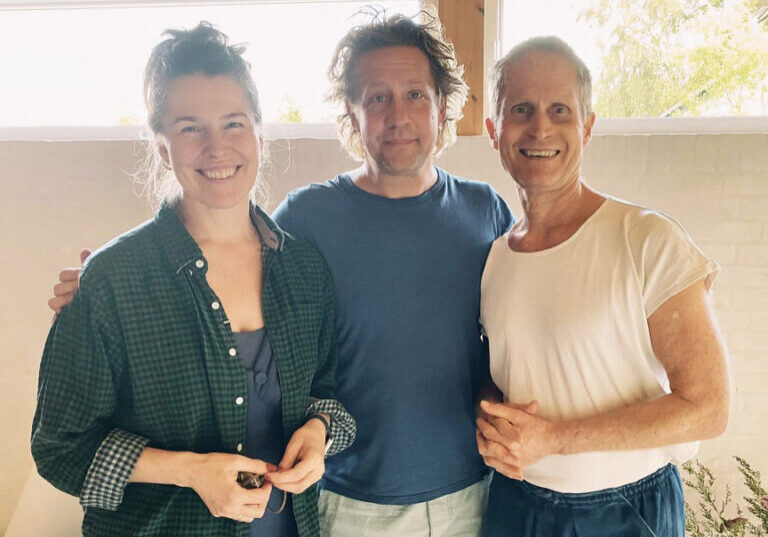
Hanneli Ågotsdatter
Master of Architecture, psychotherapist and meditation teacher.
Hanneli is Kontemplation's day-to-day manager.
In addition, she is affiliated with the Center for Systems Awareness in Boston where she is responsible for the contemplative part of the center's educational program.
Together with Martijn van Beek, she is responsible for Mind&Life Europe's international retreats for young researchers.
She is part of The Children's Life Skills Association.
Hanneli is a permanent lecturer at the Growth Center and receives practical guidance from Jes Bertelsen.

Peter Hoeg
M.A., author and teacher of meditation and creativity.
He is one of Kontemplation's regular teachers, co-founder of the Children's Life Knowledge Association and part of the Growth Center's teaching group.
Peter lives in connection with the Growth Center in Nørre Snede and receives practical guidance from Jes Bertelsen..

is a meditation teacher, psychotherapist and cand.arch.
She founded Kontemplation in 2010 based on an interest in integrating inner practice into everyday life, community, and creative expression.
Hanneli lives at the Growth Center in Nørre Snede, where she is part of the center's regular teaching group.
She is also affiliated with the Children's Life Knowledge Association and has worked with contemplative practice in teaching and creative contexts for many years.
is an MA in literary studies, author and teacher of meditation, empathy and creativity.
He is co-founder of the association Children's Life Knowledge, and co-author of the book 'Empathy – what holds the world together'.
He lives in connection with the Growth Center in Nørre Snede, is part of the Growth Center's regular teaching group and is training with Jes Bertelsen.