



PHYSIOLOGICAL ASPECTS OF BREATHING
Guided meditation with
audio file · 8 minutes
Meditation is an event that ideally involves our whole self.
That is why we often build our teaching and instructions around the five gates: the body, the breath, the emotional system, consciousness and basic creativity.
When we engage and activate these five aspects of our humanity, we are in touch with comprehensive and essential parts of ourselves.
Meditation is therefore first and foremost practical, it is something you do, it's a way we We relate to and with our whole selves.
To be able to meet others and the world more deeply from there.
A balanced amount of theory can support our meditative practice. Anatomical and physiological descriptions, informed and inspired by science, can help us feel our body and energy system in more detail.
Our body is also a microcosm that it is possible to explore. Concrete knowledge about the body can function as a map that helps us find our way in inner nature.
In this meditation, Peter describes some of the anatomical and physiological factors that underlie our breathing:
How the diaphragm flattens during inhalation and gently presses down on the organs in the abdominal cavity. And we are invited to feel this for ourselves.
How muscles between the ribs are also active during inhalation. Muscles whose elastic contraction, together with other muscles that also attach to the ribs, ensures exhalation.
It may feel as if we are emptying our lungs when we exhale. But, Peter says, in reality there is always air left in the lungs, air that mixes with the atmospheric air we inhale on the next inhalation. This creates the exact oxygen concentration that the body is capable of absorbing.
The historical Buddha, Shakyamuni, taught observing and regulating the breath as an introduction to meditation and called it anapana-sati, knowledge or truth about the breath. Various masters after him divided this technique into several different steps, in several different ways.
So on the one hand, it is fascinating to immerse yourself in the infinity of breathing.
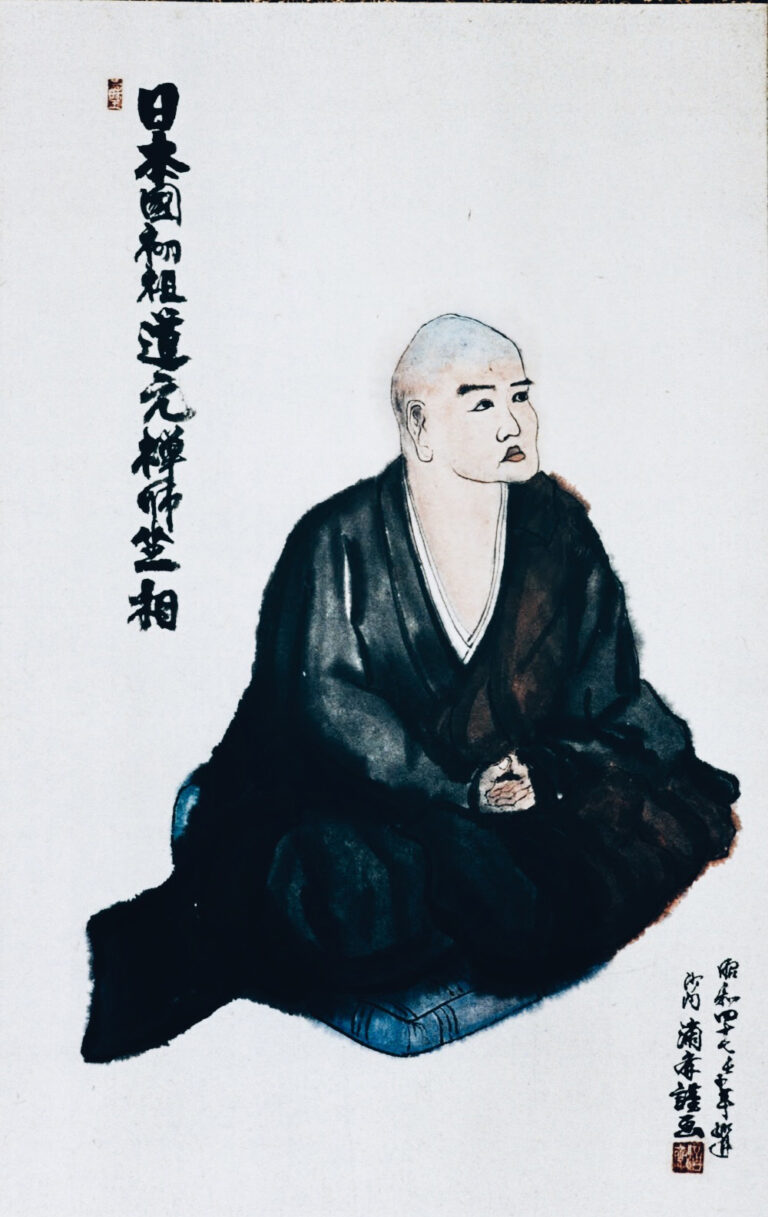
On the other hand, it may be liberating to know that Dogen Zenji, the great Japanese Zen master and founder of Soto Zen, said:
’'Forget about regulating your breathing. Rest in natural relaxation, let your breathing take care of itself, breathe calmly through your nose and relax into non-thinking.'