



THE BACKBONE OF MEDITATION
Guided meditation with
audio file · 24 minutes
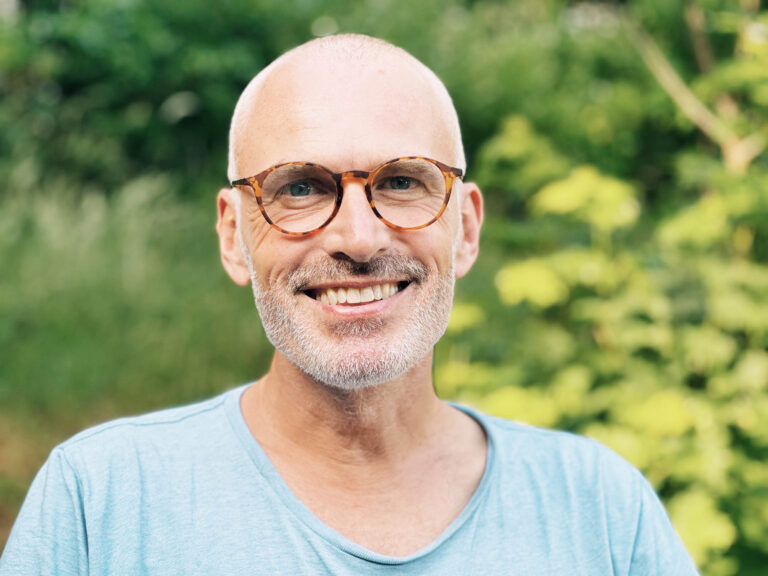
In this meditation, Søren, like in '’Still water – still mind’' which is also located in the Practice Library, a millennia-old meditative practice into the modern world.
It is about Shamatha.
About that word – which is from Sanskrit – the dictionaries say that it means 'calmness of consciousness'. That it goes back to the original approach to meditation of very early Buddhism.
And that as a basic practice, Søren explains here, it is found in all the great spiritual traditions.
In a way, the practice is quite simple: We focus on the breath and keep our attention there.
That's easier said than done.
When we, as we are invited to do here, try to follow even a few breaths with full attention, we discover that the mind is distracted again and again.
There is such a relief here to be told that this distraction also has to do with our biology, with the vigilant restlessness of our nervous system.
It is a relief that Søren repeatedly points out the gentle indulgence with which we can best discover our absence and, from this discovery, bring attention and focus back to the breath.
Part of the way Shamatha in this form, in this guidance, gains contemporary freshness, is through the description of four steps that we are helped to take as a preparation for the exercise – and as a support along the way.
The four steps are about: a) motivation, b) setting realistic goals for the exercise, c) how we can best use our willpower – and d) making it clear to ourselves in advance, with self-care, that we will inevitably encounter distractions. And that we try to prepare ourselves for what kind of distractions these might be – and how we will face them.
We, modern people, say Søren, need clarity about our motivation for – and our goals for – meditating.
We need our decisions to be realistic so that we can also address the inertia of our nervous system in relation to the intensification of immersion.
We need to understand why we practice so that we can put will and intention behind our meditation.
And to get our whole self involved in the exercise, even the parts that love to be distracted and don't want to deal with the energy intensity that awaits us when we approach the present, we can be helped by having prepared ourselves for the inevitable disruptions. And by having decided that when we are drawn into small or large absences, we will correct the course with tolerance towards ourselves.
These four steps – described here in detail and from several angles – are not only applicable to meditation. When we listen closely, they are a strategy that can be useful in relation to any important task we have set ourselves. Because they address and deal with the laws of human consciousness.
The steps are thus not only the backbone of meditation – they can be help and support for any decision regarding important projects we want to carry out.
And as we know, it will require our wholehearted commitment.
Thank you so much for such a wonderful meditation, I really enjoy the four techniques. Do you have any meditations that end with sitting in silence for 5 minutes or more before the guidance ends?
Warm hugs to you all and wishing you a lovely summer 🌾
Mette
Dear Mette – thank you for your comment and for your reflections on a format with more or longer silence before the end. This will definitely be considered in the future! Hugs to you and also a really good summer 🌻❤️
Thank you Søren. Very clear and useful and yes, for me also in other aspects of life.
Hey Katrine :-)
Dear Katrine, thank you very much, it's great to hear that you find the meditation useful! ❤️
A guideline worth using. Thank you for this contemplation and thank you in general for being generous with yourself.
Regards Eva Almegaard
Thanks Søren. The four steps are so useful to me, and they will be with me in the future. I think I will try them on other tasks, that is, without meditation.
Thank you for a pleasant guide. .
Best wishes
Linda Michaelsen
Dear Linda – we are happy to hear, thank you for writing it. We also share your experience. We will pass your words on to Søren and send you many warm summer greetings. ❤️